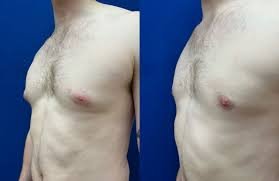
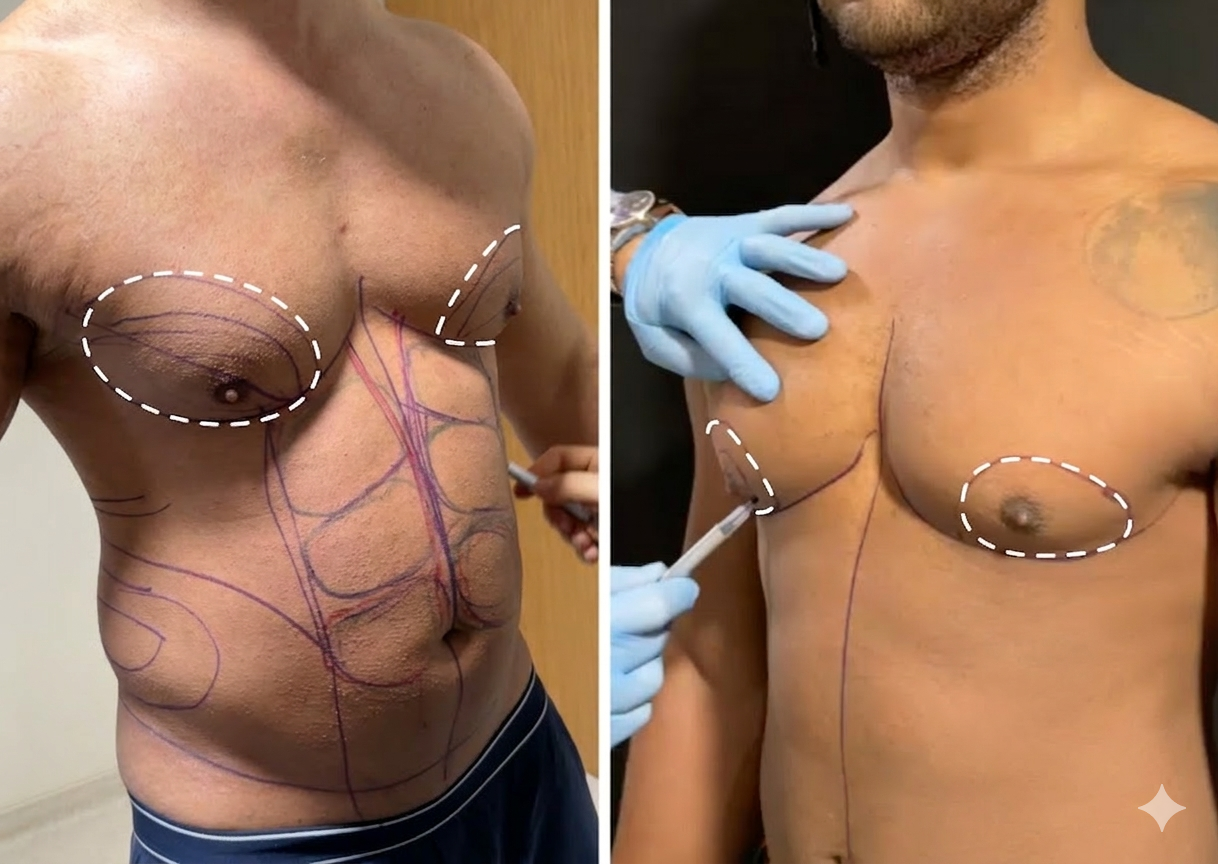

If you’ve noticed your chest looking fuller, puffier, or more rounded than you’d like — you’re not alone. Millions of men deal with this concern every year. But here’s where most people get confused: not all enlarged male chests are the same condition.
There are two very different causes behind what looks like “man boobs” — and knowing which one you have changes everything about how it can be treated.
In this guide, we’ll break down the key differences between true gynecomastia and pseudogynecomastia (chest fat), walk you through a simple self-assessment, explain when surgery is the right answer, and help you understand your options — including why thousands of men from the UK, US, and Europe are choosing Istanbul for their treatment.
What Is Gynecomastia?
Gynecomastia is the enlargement of actual breast glandular tissue in men. It is a medical condition — not just a cosmetic concern — caused by a hormonal imbalance between estrogen and testosterone.
When estrogen levels are disproportionately high relative to testosterone, the breast glands (which all males have in a dormant state) can be triggered to grow. The result is firm, sometimes tender breast tissue that sits directly beneath the nipple.
What Causes Gynecomastia?
Gynecomastia can appear at any age and is triggered by a range of factors:
- Puberty — The most common cause. Hormonal fluctuations during adolescence trigger gland growth in up to 70% of teenage boys. Most cases resolve on their own within 2 years.
- Ageing — Testosterone naturally declines with age, while estrogen levels remain or rise. This is why gynecomastia is also common in men over 50.
- Anabolic steroids — Exogenous testosterone converts to estrogen through a process called aromatisation, directly stimulating breast gland growth.
- Medications — Certain drugs including anti-androgens, some antidepressants, ulcer medications (omeprazole, ranitidine), heart medications (spironolactone, digoxin), and recreational drugs like marijuana and heroin are documented triggers.
- Medical conditions — Hypogonadism, hyperthyroidism, liver cirrhosis, kidney failure, and adrenal tumours can all disrupt hormonal balance and cause gynecomastia.
- Cannabis use — Some studies suggest cannabis may interfere with testosterone production and receptor signalling.
What Does Gynecomastia Feel Like?
This is one of the most reliable ways to distinguish it. Gynecomastia has very specific physical characteristics:
- A firm, rubbery, or disc-like lump under the nipple area
- Tenderness or sensitivity — the tissue can feel sore to the touch, especially in early stages
- Located centrally behind the nipple, not spread across the chest wall
- Bilateral (both sides) in most cases, though it can be asymmetric
- The nipple-areola complex may appear puffy, prominent, or cone-shaped
What Is Pseudogynecomastia (Chest Fat)?
Pseudogynecomastia — sometimes called “false gynecomastia” — is the accumulation of fat tissue in the chest area. There is no glandular involvement whatsoever. It is purely a fat distribution issue.
Men who carry excess body weight often store fat in the chest. This gives the appearance of enlarged breasts and can look nearly identical to gynecomastia from the outside — but the underlying tissue composition is completely different.
What Causes Pseudogynecomastia?
- Excess body weight / obesity — The primary driver. Fat cells in the chest accumulate just like they do in the abdomen, hips, or thighs.
- Hormonal influence from fat tissue — Adipose (fat) tissue produces estrogen through aromatisation. This means significant weight gain can actually elevate estrogen levels, which may in turn contribute to some glandular growth alongside the fat — creating a mixed presentation.
- Genetics — Some men genetically store more fat in the chest region regardless of overall body weight.
- Sedentary lifestyle — Reduced muscle mass combined with fat accumulation makes the chest appear larger.
What Does Pseudogynecomastia Feel Like?
- Soft, squishy, and uniform throughout — it feels like fat because it is fat
- No localised lump under the nipple — the tissue is diffuse across the chest
- Not tender to the touch
- Extends across the broader chest wall, not concentrated behind the nipple
- Often accompanied by fat deposits in other areas: abdomen, flanks, chin
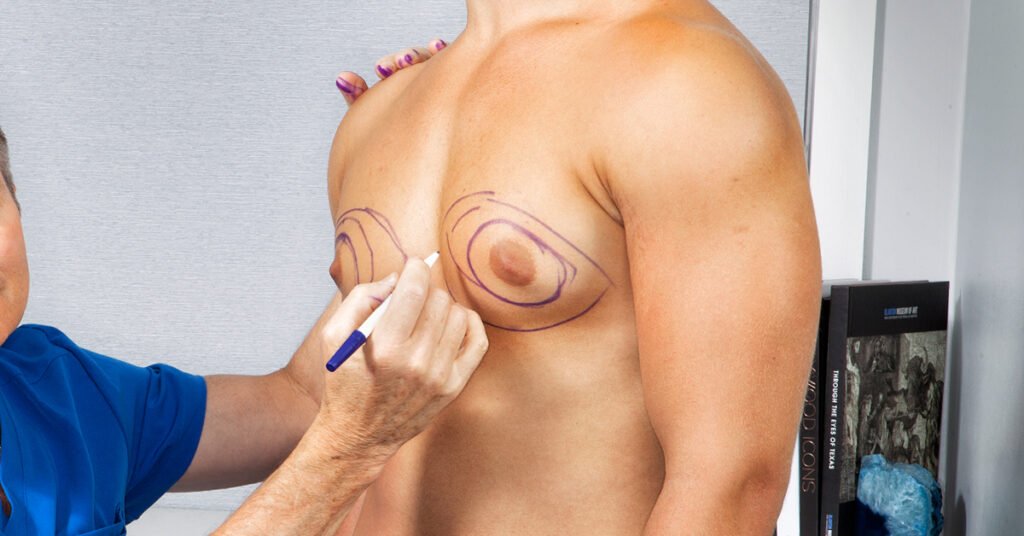
Gynecomastia vs. Chest Fat: The Core Differences at a Glance
| Feature | Gynecomastia | Pseudogynecomastia |
|---|---|---|
| Tissue type | Glandular breast tissue | Fat tissue only |
| Cause | Hormonal imbalance | Excess body fat |
| Texture | Firm, rubbery, disc-like | Soft, squishy, diffuse |
| Location | Directly behind nipple | Across entire chest |
| Tenderness | Often tender/sensitive | Not typically tender |
| Responds to weight loss? | No | Yes (partially) |
| Responds to exercise? | No | Yes (partially) |
| Requires surgery to resolve? | Almost always | Not always |
| Treatment | Gland excision (+ optional lipo) | Liposuction or weight loss |
The Self-Test: How to Check at Home
While there is no substitute for a proper clinical examination, this simple pinch test can give you a very strong indication of which condition you’re dealing with.
The Pinch Test
- Stand in front of a mirror with your shirt off.
- Use your thumb and index finger to gently pinch the tissue directly behind your nipple.
- Press firmly but carefully — you’re feeling for the quality of the tissue between your fingers.
What you feel:
- A firm, rubbery disc or button-like mass that is clearly defined and separate from the surrounding tissue → Strong indicator of gynecomastia (glandular tissue)
- Soft, uniform, pinchable fat that feels no different to the fat on your stomach or thighs → Strong indicator of pseudogynecomastia (chest fat)
- A combination of both — firm lump behind the nipple with surrounding softness → Likely a mixed presentation, which is actually very common
Additional Self-Assessment Signs
You likely have gynecomastia if:
- Your nipples are puffy, point outward, or the areola appears enlarged
- One or both nipples are tender or sensitive, especially when brushing against clothing
- The fullness is specifically centred on the nipple zone, not the outer chest
- The condition appeared during puberty and never fully resolved
- You use or have used anabolic steroids
- The issue persists even when you’re lean or after significant weight loss
You likely have pseudogynecomastia if:
- The fullness is spread evenly across your chest
- There’s no puffiness or protrusion at the nipple specifically
- The tissue is entirely soft with no firm nodule
- The issue appeared alongside weight gain and improves somewhat when you lose weight
- You carry excess weight elsewhere (abdomen, hips, thighs)
Can You Have Both at the Same Time?
Yes — and this is more common than most people realise. A mixed presentation involves true glandular tissue (gynecomastia) combined with overlying or surrounding fat (pseudogynecomastia).
This often occurs in men who developed gynecomastia in their teens, then gained weight as adults. The existing glandular tissue becomes masked or worsened by the additional fat layer.
Mixed presentations require a combined surgical approach: gland excision to remove the firm tissue + liposuction to remove the surrounding fat. This is actually the most commonly performed gynecomastia procedure at Magical Clinic Istanbul, delivering a flat and contoured chest in a single operation.
Why Gynecomastia Does NOT Respond to Diet and Exercise
This is one of the most frustrating misconceptions men live with for years. They spend months in the gym, lose significant weight, and watch fat disappear everywhere — except their chest.
The reason is simple: glandular tissue is not fat. It is a structural tissue that cannot be burned through cardio, cannot be reduced through calorie restriction, and does not respond to testosterone-boosting supplements or hormone therapies once it has formed and fibrosed (hardened).
The only proven, permanent solution for true gynecomastia is surgical removal of the glandular tissue.
Pseudogynecomastia, on the other hand, can improve with weight loss and exercise — though in many cases, especially when significant fat has accumulated, liposuction produces dramatically faster and more precise results.
Grades of Gynecomastia: How Severe Is Yours?
Gynecomastia is classified in four Gynecomastia grades based on the extent of tissue and skin excess:
Grade 1 — Small enlargement, localised to the nipple-areola area. No excess skin. The “puffy nipple” presentation. Often the most common complaint among younger men.
Grade 2a — Moderate enlargement that extends beyond the areola. No excess skin. Still no visible sagging.
Grade 2b — Moderate to significant enlargement with some skin redundancy. The chest begins to take on a more breast-like contour.
Grade 3 — Significant enlargement with marked skin excess. Clear breast-like appearance with visible sagging and drooping of the nipple-areola complex.
Grades 1 and 2a are typically treated with gland excision alone, or combined with minimal liposuction. Grades 2b and 3 may require skin tightening or additional contouring procedures.
When Should You See a Doctor?
You should consult a medical professional if:
- The condition has persisted for more than 12 months
- There is pain, tenderness, or discharge from the nipple
- You notice a hard, fixed, or rapidly growing lump (to rule out rare cases of male breast cancer)
- The condition is causing psychological distress or affecting your quality of life
- It does not improve despite weight loss or discontinuing potential causative medications
A qualified surgeon will typically request blood work to assess hormone levels (testosterone, estrogen, LH, FSH, prolactin) and may order an ultrasound to assess the tissue composition before recommending a surgical plan.
Treatment Options: What Actually Works
For True Gynecomastia
Surgical excision is the gold standard and only permanent solution. During the procedure:
- A small periareolar incision is made at the edge of the areola
- The glandular tissue is removed directly
- Liposuction may be used simultaneously to remove any surrounding fat
- The procedure takes 60–90 minutes under general anaesthesia
- Recovery is typically 5–7 days before returning to light activity
Results are permanent — once glandular tissue is removed, it does not grow back (assuming the hormonal trigger is resolved).
For Pseudogynecomastia
Liposuction — either traditional or VASER/ultrasound-assisted — is the most effective surgical option. It removes fat deposits with precision, restoring a flat, masculine chest contour. Non-surgical approaches (weight loss, increased exercise) can help, but liposuction delivers dramatically superior and faster results with no skin laxity issues if performed correctly.
For Mixed Presentations
A combined approach — gland excision + liposuction — performed in a single operation. This is the most comprehensive solution and is what the majority of patients at Magical Clinic Istanbul undergo.
Why Choose Turkey for Gynecomastia Surgery?
The UK and US offer excellent surgical care — but at a significant price premium. Gynecomastia surgery in the UK typically costs £4,000–£7,000. In the US, patients often pay $5,000–$8,000 or more.
At Magical Clinic Istanbul, the same procedure — performed by board-certified surgeons with years of experience in male chest surgery — is available at a fraction of the cost, without compromising on quality, safety, or results.
Our patients receive:
- Pre-operative consultation and blood tests included in the package
- JCI-accredited hospital facilities in Istanbul
- Experienced plastic surgeons specialised in male body contouring
- Transfers, accommodation coordination, and 24/7 patient support
- Post-operative follow-up and aftercare guidance
Istanbul is a 3–4 hour flight from most European cities and 4–5 hours from the UK. Many patients fly out on a Friday, have surgery the following day, and return home 5–7 days later — fully recovered enough to resume desk work.
Frequently Asked Questions
Can I tell the difference between gynecomastia and chest fat without seeing a doctor? The pinch test described in this article gives a strong indication, but a definitive diagnosis requires a physical examination by a qualified surgeon or GP. Blood tests and ultrasound may also be needed to fully assess the condition.
Will losing weight fix my gynecomastia? If you have true gynecomastia (glandular tissue), no — weight loss will not resolve it. If you have pseudogynecomastia (chest fat only), losing weight can help, though many men choose liposuction for faster and more precise results.
Does gynecomastia go away on its own? In teenagers, gynecomastia related to puberty often resolves within 1–2 years as hormones stabilise. However, in adult men, particularly when the condition has been present for more than 2 years, the tissue typically fibroses (hardens) and will not resolve without surgery.
Is gynecomastia surgery safe? Yes. Gynecomastia surgery is one of the most commonly performed male plastic surgery procedures worldwide. It is a low-risk procedure when performed by a qualified surgeon in an accredited facility. At Magical Clinic Istanbul, all procedures are performed at JCI-accredited hospitals with full anaesthetic teams and post-operative monitoring.
How long does recovery take after gynecomastia surgery? Most patients return to light desk-based work within 5–7 days. A compression garment is worn for 4–6 weeks. Light exercise can typically resume after 2–3 weeks, with full gym activity and heavy lifting from week 6–8. Swelling fully resolves within 3–6 months, revealing final results.
Will the results be permanent? Yes. Once glandular tissue is surgically removed, it does not grow back. Results are permanent as long as the original hormonal trigger (e.g., steroids, a specific medication) is addressed. Fat re-accumulation from significant weight gain can affect results, so maintaining a stable weight is recommended.
What’s included in a gynecomastia surgery package at Magical Clinic? Our packages typically include pre-op consultation, blood tests, the surgical procedure, anaesthesia, hospital stay, post-op compression garment, transfers, and ongoing WhatsApp support throughout your recovery. Contact our team for a personalised quote.
Ready to Find Out What You Have?
If you’ve been living with chest fullness, puffy nipples, or a chest that doesn’t match your body — don’t spend another year wondering. The first step is a consultation.
At Magical Clinic Istanbul, our team of board-certified plastic surgeons can assess your case, confirm whether you have gynecomastia, pseudogynecomastia, or a mixed presentation, and walk you through your best treatment options with full transparent pricing.
📞 WhatsApp: +905050548890 📧 Email: info@magical.clinic 🌐 Website: magical.clinic
Your consultation is free. Your results can be permanent.