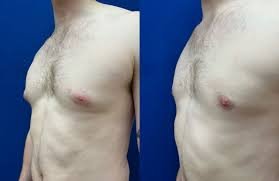
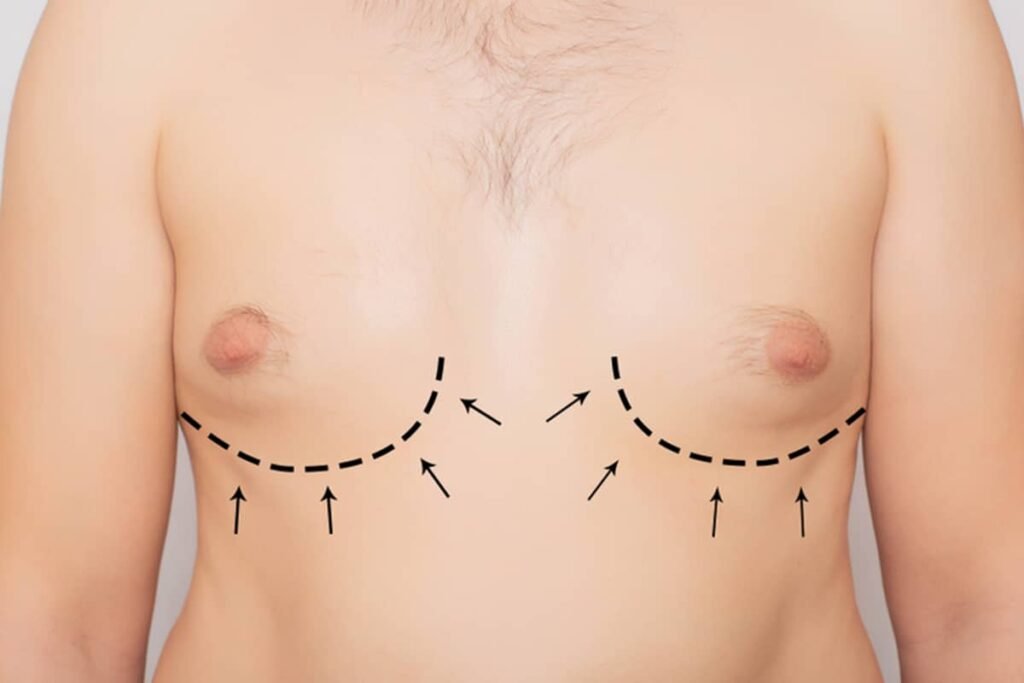

Not all gynecomastia is the same. Understanding your grade is the first step to choosing the right treatment — and getting the chest you’ve always wanted.
What Is Gynecomastia Grading?
Gynecomastia grading is a clinical classification system that surgeons use to measure the severity of male breast enlargement. The most widely used system is the Rohrich Classification, which divides gynecomastia into four distinct grades based on the amount of breast tissue, fat, and skin excess.
Your grade determines everything: which surgical technique will give you the best result, how long the procedure takes, what your recovery looks like, and how much it costs. That’s why an accurate assessment is the single most important step before any surgery.
Understanding your grade also helps you set realistic expectations. A Grade I patient can expect a quick procedure with almost invisible scars. A Grade IV patient needs more extensive surgery but can achieve an equally dramatic transformation — it just requires a different approach.
Key Takeaway
The Rohrich Classification grades gynecomastia from I to IV. Your grade determines the surgical technique, recovery time, scarring, and cost. A surgeon’s assessment with photos is the only way to get an accurate grade.
The 4 Grades of Gynecomastia
Each grade has distinct characteristics, recommended techniques, and expected outcomes.
I
Mild
Grade I — Minor Enlargement
Small button of tissue concentrated behind the areola. Often described as “puffy nipples.” No visible breast shape when wearing a T-shirt.
Appearance: Puffy or protruding nipples, minimal chest enlargement
Skin Excess: None
Best Technique: VASER lipo only or minor gland excision
Surgery Time: 1–1.5 hours
Turkey PriceFrom €2,200
II
Moderate
Grade II — Moderate Enlargement
Noticeable breast mound that extends beyond the areola. Visible through T-shirts. The most common grade we treat — affecting about 60% of patients.
Appearance: Visible breast shape, tissue extends beyond areola edge
Skin Excess: None to minimal
Best Technique: VASER lipo + gland excision (most common)
Surgery Time: 1.5–2.5 hours
Turkey PriceFrom €2,500
III
Significant
Grade III — Moderate with Skin Excess
Moderate to large breast volume with noticeable skin laxity. The areola may have started to point downward. Visible sagging when shirtless.
Appearance: Breast-like contour, mild drooping, widened areola
Skin Excess: Mild to moderate — skin may retract after lipo
Best Technique: VASER + excision ± periareolar skin tightening
Surgery Time: 2–3 hours
Turkey PriceFrom €3,000
IV
Severe
Grade IV — Marked Enlargement
Significant breast volume with substantial skin excess. Resembles female breast development. Often the result of massive weight loss or long-standing severe gynecomastia.
Appearance: Female-appearing breast, significant droop, skin folds
Skin Excess: Significant — requires surgical skin removal
Best Technique: VASER + excision + skin resection (mastectomy-type)
Surgery Time: 2.5–3.5 hours
Turkey PriceFrom €3,500
Grade Comparison at a Glance
Quick reference comparing all four grades side by side.
| Feature | Grade I | Grade II | Grade III | Grade IV |
|---|---|---|---|---|
| Severity | Mild | Moderate | Significant | Severe |
| Appearance | Puffy nipples | Visible breast mound | Breast shape + droop | Female-like breast |
| Skin Excess | None | None / minimal | Mild to moderate | Significant |
| Main Technique | VASER lipo | VASER + excision | VASER + excision + skin | Full resection + skin |
| Surgery Time | 1–1.5 hrs | 1.5–2.5 hrs | 2–3 hrs | 2.5–3.5 hrs |
| Scarring | Nearly invisible | Minimal periareolar | Periareolar + possible | Visible but fadeable |
| Recovery | 5–7 days | 7–10 days | 10–14 days | 14–21 days |
| Turkey Price | From €2,200 | From €2,500 | From €3,000 | From €3,500 |
| UK/USA Price | £5,000–£7,000 | £6,000–£9,000 | £7,000–£11,000 | £8,000–£14,000 |
How to Self-Assess Your Grade
While only a surgeon can give a definitive grade, you can get a good estimate at home with these three simple checks.
1
The Mirror Test
Stand shirtless in front of a mirror with arms at your sides. Look at your chest from the front and side. Is the enlargement barely noticeable (Grade I), clearly visible (Grade II), drooping (Grade III), or resembling a female breast (Grade IV)?
2
The Pinch Test
Pinch the tissue around your nipple between your thumb and forefinger. Hard, rubbery tissue indicates glandular gynecomastia (needs excision). Soft, squishy tissue indicates fat-dominant pseudo-gynecomastia (may respond to lipo alone). Most patients have a combination of both.
3
The T-Shirt Test
Put on a fitted T-shirt. If your chest looks normal (Grade I), slightly prominent (Grade II), obviously breast-shaped (Grade III), or you feel you need to wear baggy clothes to hide it (Grade III–IV) — this gives you a practical measure of severity.
Want a professional assessment for free? Send us front, side, and angled chest photos via WhatsApp. Our board-certified surgeon will grade your gynecomastia, recommend the best technique, and provide an all-inclusive quote — within 24 hours, no obligation.
Treatment Options by Grade
The right surgical technique depends entirely on your grade. Here’s what our surgeons recommend for each:
Grade I — Liposuction Only
For mild cases with primarily fatty tissue and puffy nipples, VASER liposuction alone is often sufficient. The ultrasound energy liquefies fat while preserving surrounding tissue, resulting in smooth contours with tiny 3mm puncture scars that are virtually invisible. If there’s a small glandular button, it can be removed through a tiny periareolar incision.
Grade II — VASER + Gland Excision
The most common combination. VASER removes the fatty component and sculpts the chest, while direct gland excision through a small cut at the areola edge removes the hard breast tissue. This is the “gold standard” approach for the majority of gynecomastia surgery patients and produces consistently excellent results.
Grade III — VASER + Excision + Skin Management
In addition to fat removal and gland excision, Grade III cases often require periareolar skin tightening — a purse-string technique that removes a ring of skin around the areola and tightens the remaining skin. Younger patients with good skin elasticity may see their skin retract naturally after VASER, avoiding additional incisions.
Grade IV — Full Surgical Correction
Severe cases require the most comprehensive approach: VASER liposuction, complete gland excision, and surgical skin resection. This may involve incisions extending from the areola (similar to a mastectomy pattern). While these produce more visible scars, they fade significantly over 12–18 months, and the transformation is life-changing.
How Grade Affects Cost in Turkey
Your gynecomastia grade directly influences the cost because higher grades require more complex techniques, longer operating times, and sometimes additional procedures like skin removal.
At Magical Clinic, all-inclusive packages start at €2,200 for Grade I and go up to €3,800 for Grade IV. Every package includes surgeon fees, hospital, anesthesia, compression garments, medications, transfers, and 12 months of aftercare support. Compare this to €6,000–€14,000 in the UK or $8,000–$15,000 in the USA — savings of 55–70%.
The only way to get an accurate quote is to send us photos for a free assessment. Our surgeon will grade your case, recommend the optimal technique, and provide a detailed all-inclusive quote — usually within 24 hours.
Price Summary
Grade I: from €2,200 · Grade II: from €2,500 · Grade III: from €3,000 · Grade IV: from €3,500. All-inclusive packages — no hidden costs. Save 55–70% vs UK/USA prices.
Frequently Asked Questions
What are the 4 grades of gynecomastia?
Grade I is minor enlargement (puffy nipples) without skin excess. Grade II is moderate enlargement visible through clothing. Grade III adds mild skin excess and drooping. Grade IV is severe enlargement with significant skin excess resembling female breasts. The Rohrich classification is the most widely used system worldwide.Can you self-diagnose your gynecomastia grade?
You can estimate using the mirror test, pinch test, and T-shirt test described above. However, only a board-certified plastic surgeon can accurately distinguish between glandular tissue and fat, assess skin quality, and determine the best surgical approach. Send us photos for a free professional assessment.Does gynecomastia grade affect surgery cost?
Yes. Grade I–II cases cost €2,200–€2,800 in Turkey as they use simpler techniques. Grade III–IV cases cost €3,000–€3,800+ due to more complex procedures, longer operating times, and skin removal. All prices are all-inclusive with no hidden costs.Which gynecomastia grade needs surgery?
All grades benefit from surgery if the condition has persisted 12+ months. Established glandular tissue is fibrotic and cannot be reduced by exercise, diet, or medication. Even Grade I patients who feel self-conscious about puffy nipples see dramatic improvement from a relatively minor procedure.
Find Out Your Grade — Free
Send us your chest photos and our board-certified surgeon will assess your gynecomastia grade, recommend the ideal technique, and provide a personalized all-inclusive quote — completely free, no obligation.
Accurate grade assessment within 24 hours
Recommended technique for your specific case
All-inclusive quote — no hidden costs
100% confidential — zero pressure
Get Free Grade Assessment on WhatsApp+90 505 054 8890
Request Free Assessment
Fill in your details and we’ll grade your gynecomastia within 24 hours.Full Name *Email *Phone / WhatsApp *Estimated GradeSelect your estimated grade…Grade I — Puffy Nipples / MildGrade II — Moderate EnlargementGrade III — Moderate + Skin ExcessGrade IV — Severe EnlargementNot Sure — Need AssessmentMessageSend Free Assessment Request
100% confidential. Photos never shared.
Request Received!
Our surgeon will assess your grade and respond within 24 hours.💬 Chat on WhatsApp