
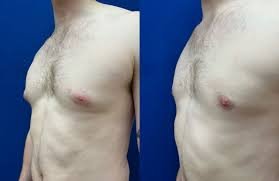

You’ve decided to do something about your gynecomastia. That’s the hard part. But now you’re facing a question that confuses almost every patient we speak to: should you get VASER liposuction, gland excision, or both?
If you’ve spent any time researching gynecomastia surgery, you’ve probably seen these two terms thrown around constantly — often without a clear explanation of what they actually do, how they differ, and why your surgeon might recommend one over the other.
Here’s the truth that most clinics won’t tell you upfront: the technique matters less than the diagnosis. A surgeon who understands what’s actually in your chest — fat, gland, or a combination — will choose the right approach automatically. The wrong technique, no matter how expertly performed, will leave you disappointed.
This article breaks down everything you need to know about both techniques, when each is used, and how to make sure you get the right one for your body.
What Is VASER Liposuction?
VASER stands for Vibration Amplification of Sound Energy at Resonance. That’s a complicated name for a remarkably elegant technology. In simple terms, VASER is an advanced form of liposuction that uses ultrasound energy to break apart fat cells before removing them.
Here’s how the process works during a gynecomastia procedure. First, the surgeon injects a tumescent solution — a mixture of saline, adrenaline, and local anaesthetic — into the chest area. This numbs the tissue, shrinks blood vessels to minimise bleeding, and loosens the fat cells from surrounding structures.
Next, a small VASER probe (about 3mm wide) is inserted through tiny puncture incisions. The probe emits ultrasound waves that vibrate at a specific frequency. These vibrations selectively target fat cells while leaving blood vessels, nerves, and connective tissue largely intact. The fat essentially liquefies.
Finally, the liquefied fat is suctioned out through a thin cannula. Because the fat has been pre-emulsified by the ultrasound energy, it comes out smoothly and evenly, which allows the surgeon to sculpt the chest with precision.
The real advantage of VASER over traditional liposuction is this selectivity. Traditional lipo uses brute mechanical force to break apart and suction fat, which can damage surrounding tissue and cause more bruising, swelling, and irregularities. VASER is gentler, more precise, and produces smoother results — which is especially important on the chest where any lumpiness or contour irregularity is immediately visible.
VASER also promotes skin retraction. The ultrasound energy stimulates collagen production in the skin, which helps it tighten and conform to the new, smaller chest contour. For younger patients with good skin elasticity, this can mean the difference between needing a skin removal procedure and not.
What Is Gland Excision?
Gland excision is exactly what it sounds like: the surgical removal of the hard, fibrous breast gland tissue that sits directly behind the nipple and areola.
If you’ve done the pinch test — pinching the tissue behind your nipple between your thumb and forefinger — and felt a firm, rubbery disc or button, that’s the gland. It’s the same tissue that enlarges during puberty in both males and females, and it’s the core reason gynecomastia develops.
During gland excision, the surgeon makes a small semicircular incision along the lower border of the areola, where the darker areola skin meets the lighter chest skin. This location is strategically chosen because the resulting scar falls along a natural colour boundary, making it virtually invisible once healed.
Through this incision, the surgeon directly visualises and removes the glandular tissue. It’s cut away from the surrounding fat and from the underside of the nipple, leaving a thin layer of tissue to maintain natural nipple contour and prevent a “cratered” appearance.
The removed tissue is typically sent to a pathology laboratory for analysis — this is standard practice and provides peace of mind by confirming the tissue is benign.
Gland excision is the only technique that can remove true glandular breast tissue. No amount of liposuction — whether traditional, VASER, laser-assisted, or any other type — can remove a solid gland. This is a critical point that many patients misunderstand, and it’s why some men who’ve had liposuction-only procedures are disappointed with their results: the gland remains behind the nipple, creating persistent puffiness or a visible lump.
The Critical Difference: Fat vs Gland
Understanding the difference between fat and gland tissue is the single most important thing you can learn about gynecomastia surgery. Everything else — the technique, the cost, the recovery — flows from this distinction.
Fat tissue is soft, compressible, and distributed across the chest. It responds to weight changes and can be removed with liposuction. When you gain weight, fat in the chest increases. When you lose weight, it decreases (though not always evenly or enough to solve the problem).
Glandular tissue is hard, fibrous, and concentrated directly behind the nipple-areola complex. It does not respond to weight changes, diet, or exercise. Once established (typically after being present for more than two years), it becomes fibrotic and permanent. Only surgical excision can remove it.
Most gynecomastia patients — roughly 65 to 70 percent — have a combination of both fat and gland. This is why the most common surgical approach is a combined procedure: VASER liposuction to remove the fatty component and sculpt the chest, plus gland excision through a periareolar incision to remove the hard tissue.
The remaining patients fall into two camps. About 15 to 20 percent have primarily fat-dominant gynecomastia (technically called pseudo-gynecomastia) where the chest enlargement is caused almost entirely by fat deposits with minimal glandular tissue. These patients may be excellent candidates for VASER liposuction alone.
The final 10 to 15 percent have gland-dominant gynecomastia, where a prominent glandular disc is the main issue, often presenting as “puffy nipples” on an otherwise lean chest. These patients need gland excision as the primary procedure, sometimes with minor liposuction to blend the contour.
When Is VASER Lipo Alone Sufficient?
VASER liposuction as a standalone procedure works best when the following conditions are met.
The chest enlargement is primarily caused by excess fat rather than glandular tissue. During your consultation, the surgeon assesses this through physical examination (the pinch test) and sometimes ultrasound imaging. If the tissue is uniformly soft without a firm glandular disc behind the nipple, lipo alone may be appropriate.
The patient is overweight or has significant fat deposits across the chest and torso. In these cases, VASER can address the chest as part of a broader body contouring approach, sometimes including the flanks, abdomen, and back for a complete transformation.
There is no significant puffy nipple appearance. Puffy nipples are almost always caused by glandular tissue pushing the nipple forward from behind. If puffy nipples are present, lipo alone will not resolve them — the gland must be excised.
The skin has good elasticity and is expected to retract after fat removal. VASER’s collagen-stimulating effect helps, but patients with very loose skin may need additional skin tightening or removal regardless of the liposuction technique used.
VASER-only procedures tend to be faster (1 to 1.5 hours), have a slightly shorter recovery, and produce the least visible scarring since the only marks are tiny 3mm puncture sites that fade to near-invisible points within a few months.
However, there is a significant risk with choosing lipo alone when glandular tissue is present: the gland will remain. Many surgeons at budget clinics perform liposuction-only procedures because they’re quicker and easier, but if the patient has glandular tissue, the results will be incomplete. The gland doesn’t show up well on liposuction, and you’ll be left with residual tissue, persistent puffiness, or the need for revision surgery.
When Is Gland Excision Essential?
Gland excision is necessary — not optional — in the following scenarios.
You have a palpable firm disc or lump behind one or both nipples. This is the hallmark of true gynecomastia and it cannot be removed by any form of liposuction. If your surgeon recommends lipo only despite the presence of a gland, seek a second opinion.
You have puffy nipples. The characteristic dome-shaped protrusion of the nipple-areola complex is caused by glandular tissue pushing from behind. Excision is the only way to achieve a flat, masculine nipple contour.
You are lean with minimal body fat but still have visible breast tissue. In lean patients, the gland is the primary (sometimes the only) component causing the chest enlargement. VASER has very little fat to remove in these cases.
You have had previous liposuction that failed to fully resolve your gynecomastia. This is a surprisingly common scenario. Patients come to us after having lipo at other clinics — sometimes multiple times — and they still have residual tissue because the gland was never addressed.
Your surgeon identifies glandular tissue during pre-operative assessment. A skilled surgeon can reliably detect glandular tissue through physical examination. Some clinics also use ultrasound imaging for borderline cases.
Gland excision adds a small periareolar scar that is virtually invisible once healed. The trade-off between a tiny, hidden scar and a flat chest is one that every patient we’ve treated considers worthwhile.
The Combined Approach: VASER + Gland Excision
For the majority of gynecomastia patients, the combined approach of VASER liposuction plus gland excision delivers the best results. This is the technique we perform most frequently at Magical Clinic, and there are several reasons why it has become the gold standard.
First, it addresses both components of gynecomastia simultaneously. The VASER removes the fatty layer and sculpts the chest contour, while the excision removes the glandular disc. Together, they produce a chest that is both flat and naturally contoured.
Second, the VASER step actually makes the excision easier and more precise. By removing the surrounding fat first, the gland becomes more isolated and easier to visualise, allowing the surgeon to remove it completely while preserving surrounding tissue.
Third, VASER’s skin-tightening effect benefits the excision area. After the gland is removed, the space where it sat needs to fill in and flatten. The collagen stimulation from VASER helps the overlying skin contract smoothly over this area, reducing the risk of any depression or irregularity.
Fourth, the combined approach allows for feathering and blending. After removing the gland, the surgeon uses VASER to blend the transition zone between the excision site and the surrounding chest, creating seamless contours. This is what separates good results from exceptional results.
The combined procedure typically takes 1.5 to 2.5 hours, requires general anaesthesia, and is performed as a day-case surgery. You go home the same day wearing your compression garment.
Hi-Def VASER: The Premium Option
For patients who want more than just the removal of gynecomastia — those who want a sculpted, athletic chest appearance — Hi-Def VASER offers an advanced option.
Hi-Def VASER takes the standard VASER technique further by selectively removing and repositioning fat to reveal and enhance the underlying muscular anatomy. In the chest area, this means etching around the pectoralis muscle borders, defining the midline separation between the pecs, and creating shadow lines that mimic a toned, gym-built chest.
This technique is most appropriate for patients who are relatively lean and physically active but whose muscle definition is hidden by overlying fat and glandular tissue. It’s also popular with patients who have worked hard in the gym but can’t achieve visible chest definition due to their gynecomastia.
Hi-Def VASER requires a higher level of surgical skill and artistic vision. Not every surgeon who performs standard VASER can deliver Hi-Def results. The procedure takes longer (typically 2 to 3 hours) and costs more, but for the right candidate, the transformation is remarkable.
At Magical Clinic, Hi-Def VASER with gland excision is available as a premium package for patients who want the most sculpted result possible.
Recovery Comparison
Understanding the recovery difference between techniques helps you plan your trip and set expectations.
After VASER liposuction alone, most patients experience mild soreness and swelling for the first three to five days. Bruising is typically minimal due to the gentle nature of VASER. The tiny puncture incisions heal quickly and don’t require sutures — they’re closed with simple adhesive strips. Most patients can return to desk work within five days and light exercise within three weeks. The compression garment is worn for four to six weeks.
After gland excision alone, recovery is similar in duration but the discomfort pattern is slightly different. Because tissue is cut away from behind the nipple, there is typically more tenderness and sensitivity in the nipple area for the first one to two weeks. The periareolar incision is closed with fine dissolvable sutures. Bruising may be slightly more visible around the areola. The same timeline applies: desk work in five to seven days, exercise in three to four weeks.
After the combined VASER plus excision procedure, recovery combines elements of both. Overall swelling and soreness peaks around day two to three and steadily improves. The compression garment is critical — it controls swelling, supports the new contour, and prevents fluid accumulation. Most patients describe the discomfort as “like a hard chest workout at the gym” and rate it three to four out of ten on the pain scale. We provide effective pain medication that keeps you comfortable.
Regardless of technique, the timeline for seeing final results is the same: initial improvement is visible immediately, but residual swelling takes three to six months to fully resolve. The chest continues to refine and settle during this period.
Scarring Comparison
Scarring is a major concern for gynecomastia patients, and the difference between techniques is worth understanding.
VASER liposuction produces the least visible scars. The entry points are tiny — about 3mm — and are strategically placed in natural skin creases or along the areola border. Within three to six months, they fade to small dots that are extremely difficult to spot, even when looking closely.
Gland excision requires a periareolar incision — a semicircular cut along the lower border of the areola. Because this incision sits at the natural transition between dark areola skin and lighter chest skin, it heals along a colour boundary that camouflages it naturally. At twelve months post-surgery, most periareolar scars are virtually invisible. We also provide silicone scar treatment gel and tape in every package to optimise the healing.
The combined procedure leaves both types of marks: the small VASER punctures and the periareolar excision scar. Even together, the total scarring is minimal and well-concealed.
For Grade III and IV cases that require skin removal, scarring is more extensive — typically a circumareolar pattern (around the entire areola) or in severe cases an anchor-shaped incision. These scars are more visible initially but fade significantly over twelve to eighteen months with proper scar management.
How Your Surgeon Decides Which Technique You Need
A skilled gynecomastia surgeon determines the right approach through a structured assessment process.
During the physical examination, the surgeon palpates your chest to assess the ratio of fat to gland. They feel for the glandular disc — its size, shape, firmness, and extent. They assess skin quality, elasticity, and the degree of excess. They evaluate your overall body composition, chest wall anatomy, and symmetry.
Based on this examination, they classify your gynecomastia by grade (I through IV) and by composition (fat-dominant, gland-dominant, or mixed). This classification directly determines the surgical plan.
Grade I with minimal gland and soft tissue often needs VASER alone or VASER with minor excision. Grade II with a palpable gland needs the combined VASER plus excision approach. Grade III adds skin management to the equation. Grade IV requires the most comprehensive approach including skin removal.
A critical red flag is any surgeon who recommends a technique before examining you or seeing photos. Every chest is different, and a one-size-fits-all approach produces inconsistent results. At Magical Clinic, our surgeon personally reviews your chest photos, grades your gynecomastia, and recommends a specific technique tailored to your anatomy before you commit to anything.
Cost Differences in Turkey
The technique used affects the cost of your surgery because more complex procedures require longer operating times, additional equipment, and higher surgical skill.
VASER liposuction alone for gynecomastia starts from approximately €2,200 in Turkey. This applies to Grade I cases with primarily fatty tissue and no significant glandular component.
Gland excision alone is less common as a standalone procedure but falls in a similar range — approximately €2,200 to €2,500 — and is typically suited for very lean patients with isolated glandular tissue.
The combined VASER plus gland excision — the most common approach — ranges from €2,500 to €3,200 depending on the extent of the procedure and the grade of gynecomastia.
Hi-Def VASER with gland excision commands a premium due to the additional surgical time and expertise required, typically €3,000 to €3,500.
For Grade III and IV cases requiring skin removal, prices range from €3,200 to €3,800 as the procedure is more complex and takes longer.
All prices at Magical Clinic are fully inclusive: surgeon fees, JCI-accredited hospital, general anaesthesia, pre-operative blood tests, two compression garments, all medications, VIP transfers, follow-up appointments, and twelve months of 24/7 WhatsApp aftercare support.
For comparison, the same procedures cost £6,000 to £12,000 in the United Kingdom and $8,000 to $15,000 in the United States — meaning Turkey offers savings of 55 to 70 percent without any compromise on quality or safety.
Common Mistakes Patients Make When Choosing a Technique
After treating thousands of gynecomastia patients, we’ve identified several patterns of mistakes that lead to suboptimal results.
Choosing a clinic that only offers liposuction is one of the most common errors. Some clinics position themselves as “liposuction specialists” and perform lipo on every gynecomastia patient regardless of their anatomy. If you have glandular tissue, lipo alone will not resolve it, and you’ll need revision surgery — which is more complex and more expensive than getting it right the first time.
Selecting a technique based on scarring concerns alone is another mistake. Some patients insist on VASER only because they don’t want a periareolar scar, even when their surgeon recommends excision. The periareolar scar is virtually invisible once healed, and choosing an incomplete procedure to avoid it means living with a result that doesn’t match your expectations.
Going to a general cosmetic surgeon rather than a gynecomastia specialist is also risky. Gynecomastia surgery requires specific expertise in male chest anatomy, tissue assessment, and contouring techniques. A surgeon who performs gynecomastia procedures regularly will produce consistently better results than one who does it occasionally alongside breast augmentations, facelifts, and tummy tucks.
Failing to send adequate photos for assessment is a surprisingly common issue. Many patients send a single front-view photo, which doesn’t provide enough information. Your surgeon needs front, side, and angled views, ideally with arms at your sides and with arms raised, to accurately assess your grade and plan the right technique.
The Bottom Line: Which Technique Is Right for You?
If your chest is soft all over with no firm tissue behind the nipples, and you carry excess fat on your torso, VASER liposuction alone may be your answer.
If you have a firm disc or lump behind one or both nipples, puffy nipples that protrude through T-shirts, or have had unsuccessful liposuction in the past, you need gland excision — and almost certainly combined with VASER for optimal contouring.
If you’re like the majority of gynecomastia patients — with a mix of fat and gland tissue — the combined VASER plus gland excision approach will give you the best result.
If you want a sculpted, athletic chest appearance beyond just correcting the gynecomastia, Hi-Def VASER with gland excision is the premium option.
And if you have significant skin excess from long-standing gynecomastia or massive weight loss, you’ll need a more comprehensive approach that includes skin management.
The only way to know for certain is to have your chest assessed by a specialist. Send us front, side, and angled chest photos via WhatsApp at +90 505 054 8890 or through the contact form on our website. Our board-certified surgeon will personally review your photos, identify whether your gynecomastia is fat-dominant, gland-dominant, or mixed, recommend the specific technique for your case, and provide a fully inclusive quote — all within 24 hours, completely free, with absolutely no obligation.
Your chest, your choice. But make sure it’s an informed one.
About Magical Clinic: We are a specialist medical tourism clinic based in Istanbul, Turkey, operating within JCI-accredited hospitals. Our board-certified plastic surgeons have specific expertise in gynecomastia and male chest contouring. All packages are fully inclusive with 12 months of aftercare support. Contact us at info@magical.clinic or WhatsApp +90 505 054 8890 for a free assessment.


