
Bilateral Gynecomastia: Meaning, Causes & How It's Corrected
Bilateral gynecomastia means both breasts are enlarged. Learn the common causes, how grades are assessed and how both sides are corrected in one operation.
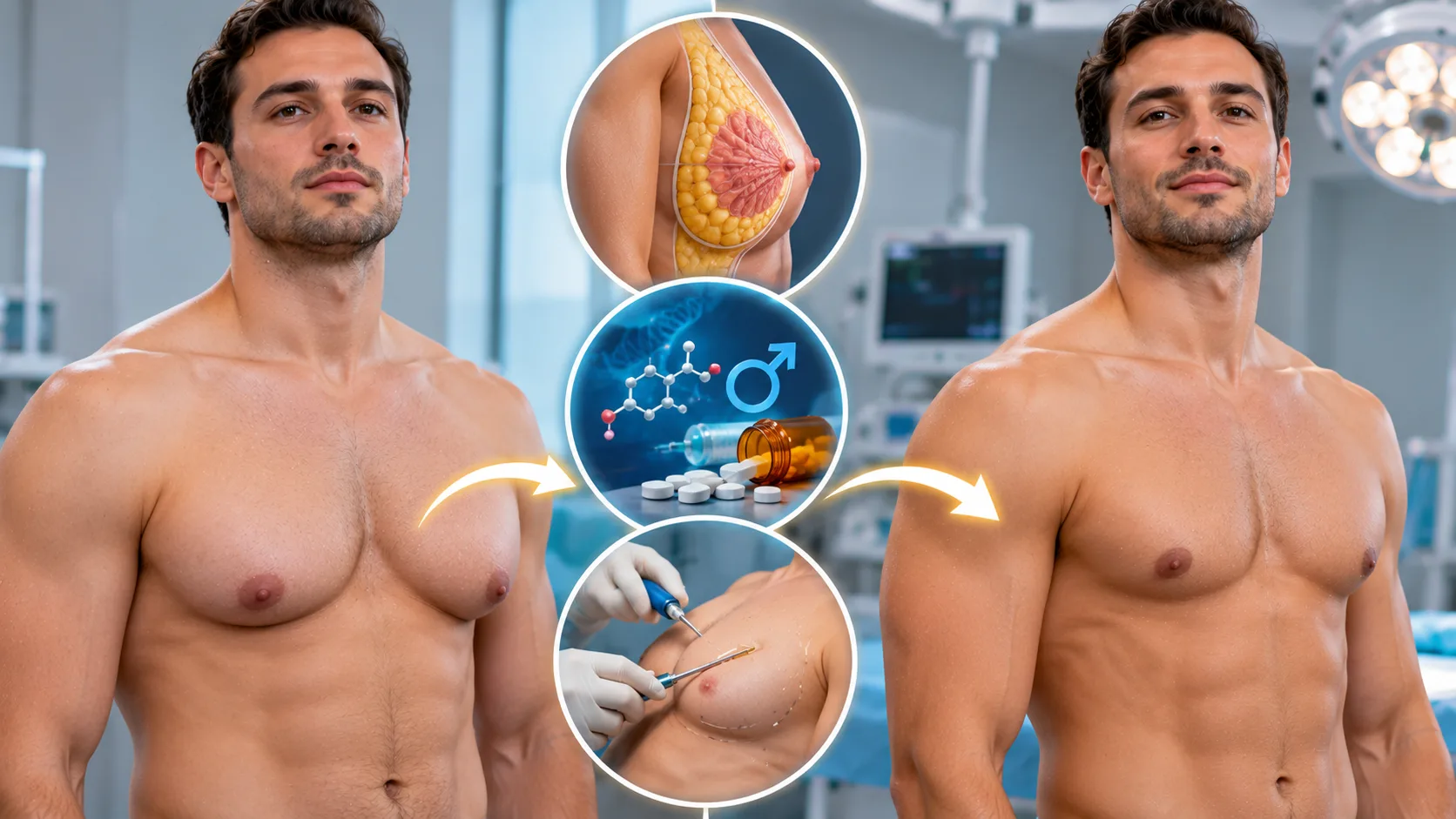
If both sides of your chest have become fuller, you are not alone. Bilateral gynecomastia means enlargement of breast tissue on both sides of the chest, and it is the typical pattern of the condition. It is usually benign, which means it is not cancer, but it can still affect how you feel in a T-shirt, at the gym or on the beach. This guide explains what bilateral gynecomastia means, what causes it, how doctors assess it and how both sides are corrected in one operation. If you are weighing up gynecomastia surgery in Turkey, you will also find what treatment involves, what it costs and what the trip looks like.
Key Takeaways
- Bilateral gynecomastia means both breasts are enlarged, usually from glandular tissue, fat or a mix of the two.
- Most cases are benign, but any firm, fixed, one-sided or changing lump needs a doctor's review.
- Common causes include puberty, aging, some medicines, liver or kidney disease, hormone imbalances and anabolic steroids.
- The Simon grades (I to IV) describe how much gland, fat and excess skin is present, and they guide which surgery makes sense.
- Both sides are usually corrected in one operation. Our Istanbul packages run from $2,500 to $5,500, all-inclusive, flights excluded.
What Is Bilateral Gynecomastia?
Bilateral gynecomastia is the enlargement of breast tissue on both sides of a man's chest. The word comes from Greek roots meaning 'woman' and 'breast'. It is an old medical label that describes how the chest looks and says nothing about gender identity or sexuality.
The enlargement can come from glandular tissue, from fat, or from both. Glandular gynecomastia is a firm, rubbery disc of tissue directly behind the nipple, and it can be tender, especially in the early stages. Fat-only enlargement is called pseudogynecomastia. It feels softer, has no defined disc, and is treated differently. Many men have a combination, with a glandular core and extra fat around it.
A surgeon can usually tell the two apart on examination. That distinction matters because it decides whether liposuction alone is likely to be enough, or whether the gland itself needs to be removed.
A case is called bilateral when both breasts are affected. The two sides are rarely identical, and one side may be noticeably larger or firmer than the other. The overall pattern is still bilateral as long as both sides are enlarged.
How bilateral gynecomastia differs from general chest fat
General weight gain tends to add fat across the whole upper body, including the chest, the sides and the upper abdomen. Gynecomastia usually centers on the area directly below the nipple, and its most noticeable feature is often a raised, rounded shape rather than a soft, spread-out fullness. The two can coexist, which is one reason an examination is more useful than a self-diagnosis from a photo.
Chest fat often shifts when your overall weight changes. A firm glandular disc usually stays much the same, which is why weight loss alone does not always resolve it.
Bilateral versus unilateral gynecomastia
Most men with gynecomastia have it on both sides. This two-sided pattern is the typical one, and it is generally benign. One-sided (unilateral) enlargement is less common. Because a lump on one side can have causes other than gynecomastia, one-sided enlargement should always be checked by a doctor rather than assumed to be the usual condition.
Asymmetry is different. If both sides are enlarged but one is clearly bigger, that is still bilateral gynecomastia. A doctor may ask whether the difference has been stable, growing or changing, because that helps determine how urgently the case needs review.
How the two sides can look different
Even when both sides are involved, they often differ in size, firmness and shape. Bodies are rarely perfectly symmetrical, and many men have a small natural difference between their two sides even without gynecomastia. Surgery aims for balance rather than an exact mirror image.
It helps to know this before any consultation. If a surgeon tells you that a small difference will remain after healing, that is usually an honest description of what is achievable, not a sign of a poor plan.
How Common Is Bilateral Gynecomastia?
Gynecomastia is common in men, with clear peaks in newborns, in boys going through puberty and in men in later life. A review published in Mayo Clinic Proceedings describes its frequency and features across these groups.
Exact figures differ between studies, because researchers use different age groups, definitions and populations. Treat any single percentage you read online with caution, especially if it does not name its source. What matters most for you is whether your own chest is changing, how quickly, and whether anything else about your health has changed.
Here is how the condition tends to appear across life stages.
- Newborns. Many babies have temporary breast enlargement caused by maternal hormones that cross the placenta before birth. It often settles without treatment in the first weeks or months of life.
- Puberty. Hormone levels shift quickly during adolescence, and many teenage boys notice tender swelling on one or both sides. For many, it settles over time. Swelling that is persistent, one-sided, hard or growing should be checked by a doctor.
- Adulthood. Enlargement in adult men can develop gradually. It may be linked to a medicine, a health condition, body weight or hormone changes with age. Enlargement of this kind usually does not resolve on its own.
- Later life. Gradual hormone changes and increasing body fat can lead to enlargement that persists. Any lump in an older man still needs a clear explanation from a doctor, and it should not be assumed to be harmless.
The advice in this guide is written for adults. If you are under 18, speak to a family doctor before making any decision about your chest.
What Causes Bilateral Gynecomastia?
Gynecomastia develops when the balance between estrogen and androgen (male hormone) effects shifts toward estrogen, or when breast tissue becomes more sensitive to normal hormone levels. A widely cited review in the New England Journal of Medicine sets out these hormonal mechanisms and the main causes.
Men have estrogen as well as testosterone, and chest tissue responds to both. Problems can arise when estrogen effects rise relative to androgen effects, when androgen levels fall, or when the breast tissue is more responsive than usual. Fat tissue also plays a part, because it contains enzymes that can convert some male hormones into estrogen-like hormones. This is why body weight and hormone balance often interact.
Often no single trigger is found. Many men have more than one contributing factor, such as excess body weight combined with a medicine, or a hormone change that comes with age. Finding the cause is therefore less about picking one answer and more about listing every plausible contributor, then deciding which ones can be changed.
The table below summarizes the main causes a doctor may consider. It is a general guide, not a checklist for self-diagnosis.
| Cause | Typical situation | What to know |
|---|---|---|
| Puberty | Teenage boys | Hormone levels change quickly. Often settles over time, but persistent, one-sided or tender swelling should be reviewed. |
| Aging | Men in middle and later life | Gradual hormone change and increasing body fat can both contribute. |
| Certain medicines | Varies by drug | Some heart and blood pressure medicines, certain antibiotics, and some medicines for prostate conditions or stomach acid are linked in some people. Never stop a prescribed medicine on your own. |
| Liver disease | Chronic liver conditions | The liver helps clear hormones. When it is not working well, the hormone balance can shift. |
| Kidney failure | Chronic kidney disease | Kidney disease can affect hormone levels and how they are processed. |
| Low testosterone | Hypogonadism | Lower androgen levels can allow estrogen effects to dominate. A doctor can test levels. |
| Overactive thyroid | Hyperthyroidism | Thyroid imbalance can affect hormone levels. A simple blood test can check thyroid function. |
| Anabolic steroids and prohormones | Bodybuilding or performance use | A well-known cause. Hormone shifts can persist after stopping. |
| Excess body fat | Obesity or weight gain | Adds fat to the chest and can contribute to the hormone shift described above. |
| No identifiable cause | Idiopathic | Common. No cause is found despite checks. |
Medicines and supplements
Some commonly prescribed medicines are linked with breast enlargement in some people. These include some heart and blood pressure medicines, certain antibiotics, and some medicines used for prostate conditions or stomach acid. The link is not the same for everyone, and many people who take these medicines never develop gynecomastia. Supplements can also play a role, so include them when you list your medicines.
A useful habit is to write down everything you take, with the reason and the approximate start date. Include prescription medicines, over-the-counter products, herbal remedies and supplements. Your doctor or pharmacist can then review the list and tell you whether any item is a plausible contributor.
Never change, reduce or stop a prescribed medicine on your own. If you think a medicine may be contributing, speak to the prescriber first, because stopping some medicines suddenly can be unsafe and a different medicine may be a better option.
Anabolic steroids and prohormones
Anabolic steroids and prohormones are a well-known cause of gynecomastia in men who use them, especially for bodybuilding or performance. The hormone shifts can persist after stopping, which can make the chest change harder to reverse.
Surgeons generally want a stable hormonal picture before operating. This is why our candidacy criteria ask for at least three months off steroids or prohormones before surgery. Disclosing any use honestly to your surgeon matters, because it affects timing, anesthesia planning and healing.
Body weight
Excess body fat adds to the chest and can contribute to gynecomastia. Because fat tissue contains an enzyme that converts some male hormones into estrogen-like hormones, weight gain can make an existing imbalance more noticeable.
Losing weight may reduce fat-related enlargement, which can make the chest look flatter and firmer over time. It does not usually remove firm glandular tissue, so many men with a glandular component find that weight loss helps only part of the problem. Our candidacy criteria ask for a stable weight for at least six months before surgery, so that the result reflects your settled body shape.
Liver, kidney and thyroid conditions
Chronic liver disease, chronic kidney disease and an overactive thyroid can all change hormone levels or how the body handles them. Because these conditions can be serious in their own right, gynecomastia linked to them should be investigated by the doctor who manages the condition.
If you have been diagnosed with one of these conditions, bring the chest change to your appointment. Do not assume the change is simply cosmetic, and do not assume it is caused by the condition without a check.
Hormone levels and testing
When androgen levels are low, estrogen effects can become more noticeable. A doctor can test hormone levels with a blood sample. A single reading may need to be repeated before it is interpreted, so results should be read by a clinician rather than compared with online reference ranges.
When no cause is found
Sometimes a full review finds no clear cause. This is described as idiopathic gynecomastia. It is common and does not mean something has been missed, although a doctor will still want to rule out the important causes first. Even without a cause, the treatment options are the same.
How Can You Tell Glandular Tissue From Fat?
A surgeon can usually tell glandular tissue from fat by feel and examination. The difference matters because the treatment differs. Liposuction removes fat well, but it does not remove a firm disc of gland, so a glandular component often needs direct removal. The table below shows the usual differences.
| Feature | Glandular gynecomastia | Pseudogynecomastia (fat only) |
|---|---|---|
| Feel beneath the nipple | Firm, rubbery disc of tissue | Soft, with no defined disc |
| Tenderness | Can be tender, especially early on | Usually not tender |
| Shape | Disc-shaped and centered on the nipple | Spread across the chest, often heavier at the sides |
| Effect of weight loss | Often little change in firm tissue | Often reduces with weight loss |
| Typical treatment | Gland excision, often with liposuction | Liposuction alone in many cases |
You can do a basic check yourself by lying on your back and gently feeling beneath the nipple for a firm, rubbery disc. Compare both sides, and note whether the tissue is soft and spread out or firm and centered. Write down what you find, with the date.
A self-check is not an examination, and it cannot rule out anything serious. Firm or fixed tissue, a lump on one side only, or any change in the nipple or skin should be checked by a doctor, not managed at home. If you are unsure, book a doctor's review rather than relying on your own judgment.
When Should You See a Doctor?
Most cases of bilateral gynecomastia are benign, but some chest changes need prompt review. The signs below are not usual in gynecomastia, and a doctor can help you tell the difference. Male breast cancer is uncommon, but it does exist, which is why these signs should never be ignored.
See a doctor promptly if you notice:
- A hard, fixed or immovable lump in the breast
- A lump on one side only, or a lump that is growing
- Nipple discharge, or bleeding from the nipple
- Skin dimpling or puckering over the breast
If you have chest pain together with breathlessness, call your local emergency number now.
Tenderness on its own is not a reason to panic, because glandular tissue is often tender, especially early on. However, tenderness combined with any sign in the box above is a reason to book a prompt appointment. If you are not sure which category your symptoms fall into, describe them to a doctor and let them decide.
How Is Bilateral Gynecomastia Diagnosed?
Diagnosis usually starts with your history and a physical examination. Most men do not need advanced tests, but a doctor may order them when there is a lump, an unclear cause or a hormone concern.
Diagnosis is a process of narrowing down, not a single test. Your doctor is trying to answer three questions: is this gynecomastia, which tissue is involved, and is there an underlying cause that needs treating?
What your doctor will ask
Your doctor may ask when you first noticed the change, whether it has been stable, growing or tender, and whether one side or both are affected. Expect questions about medicines, supplements, anabolic steroid or prohormone use, alcohol, recreational drug use, and any medical conditions in you or your family. Honest answers help your doctor find the real cause.
Be ready to describe your general health, recent weight changes, sleep, energy levels and any other changes in your body, including in your testicles or sex drive. These details matter because they help the doctor decide which tests make sense.
Questions to ask your doctor
Writing down questions beforehand makes the appointment more productive. Useful questions include:
- Is this gynecomastia, or could it be something else?
- Is the tissue mainly glandular, mainly fat, or a mix?
- Does anything on my medicine or supplement list look like a likely contributor?
- Do I need blood tests or imaging, and what will they check?
- What would make you want to see me again sooner?
- If I am considering surgery later, what would you need to know about my health first?
Physical examination
The doctor will assess size, shape and firmness, check whether the tissue is glandular or fatty, and look at the skin and nipples. The testicles may also be examined, because hormone-related problems can be linked to them.
The examination usually takes a few minutes and needs no special preparation. You may be asked to lie down and raise your arms, which helps the doctor compare both sides.
Blood tests and imaging
Blood tests can check hormone levels, thyroid function, and liver and kidney function, depending on your history. The table below shows the main categories and when each one is typically used.
| Test | What it checks | When it is usually considered |
|---|---|---|
| Hormone blood tests | Testosterone and other hormone levels | Suspected hormone imbalance, or unclear cause |
| Thyroid function test | Thyroid hormone levels | Symptoms or signs of thyroid disease |
| Liver and kidney function tests | How well these organs are working | Known liver or kidney condition, or part of a wider review |
| Ultrasound | Breast tissue, and any lump | Lumps, asymmetry, or uncertainty about tissue type |
| Mammogram | Breast tissue, using X-ray | When a lump or suspicious finding needs closer assessment |
Imaging is used when there is a lump or when a serious cause needs to be ruled out. Not every man needs it. A doctor decides based on the examination and history.
Tissue sampling and histology
A tissue sample may be taken in some cases, but this is decided by the doctor based on concern. When surgery is performed, the removed tissue is usually sent to a laboratory for histology, which confirms what was removed and checks it under a microscope. Histology is included in our packages.
If you are still working out why this has happened and what to do first, our step-by-step plan on why do I have gynecomastia sets out the questions to ask and the order to tackle them.
How Is Gynecomastia Graded?
The Simon classification is a widely used system that sorts gynecomastia into four grades based on the amount of glandular tissue, the amount of excess skin and how much the breast sags. Grades help surgeons choose the right operation and help you compare treatment options.
The table below gives a general overview. Your surgeon will assess your own grade in person, because photographs and a quick look can miss important details.
| Grade | What it usually looks like | Usual approach (general guide) |
|---|---|---|
| Grade I | Small enlargement, mainly glandular or fatty, with no excess skin | Liposuction, or gland excision through a small incision |
| Grade II | Moderate enlargement with some excess skin around the areola, without marked sagging | Gland excision, often with liposuction; skin reduction may be needed |
| Grade III | Marked enlargement with excess skin and sagging | Gland removal, skin reduction and nipple repositioning |
| Grade IV | The most advanced stage, with pronounced sagging and significant excess skin | Skin reduction and nipple repositioning, usually with gland removal |
What each grade means in practice
Grade I is the mildest stage. The chest is fuller than usual, but the skin is not stretched and the nipple sits in its normal position. For many men at this stage, the change is mostly glandular or fatty, and a surgeon can often address it through a small, targeted procedure.
Grade II adds some excess skin around the areola. The chest looks more clearly enlarged, and the skin may need tightening as well as tissue removal. Surgeons often combine gland removal with liposuction at this stage.
Grade III involves marked enlargement with sagging. The breast shape may have changed, and the nipple may sit lower than it should. Treatment normally includes removing gland, reducing excess skin and repositioning the nipple.
Grade IV is the most advanced stage, with pronounced sagging and significant excess skin. The overall approach is similar to grade III but usually involves more extensive skin reduction, and the operation takes longer.
Why grades are a guide, not a rule
Two men at the same grade can have different skin quality, body shape and goals, so the examination matters more than the label. The grade helps set expectations and plan the operation, but it does not replace a personal assessment.
Grades also do not reflect how you feel about your chest. A man at grade I can find it distressing, and a man at grade III may seek treatment only for practical reasons. Your goals are an important part of the decision.
Our packages follow the same logic. VASER liposuction alone is listed for grade I or pseudogynecomastia, VASER with gland excision for grade I–II, and skin tightening with nipple repositioning for grade III–IV. The price section later in this guide shows how each package maps to the grade.
How Is Bilateral Gynecomastia Corrected?
Bilateral gynecomastia is usually corrected with surgery that removes glandular tissue, fat or both, with skin reduction in larger cases. Both sides are normally treated in the same operation, because the goal is a balanced chest, not a one-sided fix.
The right approach depends on the grade, the type of tissue, the quality of the skin and your goals. The table below compares the main options.
| Approach | Best suited to | What it addresses |
|---|---|---|
| Weight loss and medicine review | Mild cases, or where a medicine or body weight is a clear factor | May reduce fat; does not usually remove firm gland |
| VASER liposuction | Fat-predominant enlargement, grade I | Fat |
| Gland excision | Glandular tissue, usually grade I–II | Firm gland tissue |
| VASER with gland excision | Grade I–II, our most popular combined approach | Fat and gland |
| Skin reduction and nipple repositioning | Grade III–IV | Excess skin and nipple position |
Non-surgical options
Weight loss may reduce fat-related enlargement, though it generally does not remove firm glandular tissue. If a medicine is contributing, a prescriber may be able to review it. In some early, tender cases, a specialist may consider hormone-modifying medicines. These are prescription-only, are not suitable for everyone, and are not a reliable fix for established gynecomastia.
Exercise can reduce fat, but it will not remove gland tissue, and compression garments do not change the tissue beneath. For most adult men with established gynecomastia, non-surgical measures help with contributing factors but do not complete the treatment.
Why both sides are treated together
Treating both sides in the same session means one anesthetic, one recovery period and a single plan aimed at symmetry. For most patients, one recovery is less disruptive than two separate operations.
Surgeons aim for balance rather than identical sides, because natural bodies are rarely perfectly symmetrical. Some difference between sides can remain after healing, and a good plan explains this in advance. Your surgeon will mark both sides and compare them before the operation, so you can see the planned result.
VASER liposuction
VASER is a form of ultrasound-assisted liposuction. Ultrasound energy softens fat before it is removed through small incisions, which helps the surgeon shape the chest with more control. It is most useful where fat is a significant part of the enlargement, and it can be combined with gland excision when both are present.
Hi-Def VASER is designed for a more defined chest contour, and your surgeon will confirm which option suits your anatomy. A more defined result depends on skin quality, the amount of fat to be removed and the surgeon's assessment, so it cannot be promised in advance.
Gland excision
When glandular tissue is present, the surgeon removes it, usually through a small incision at the edge of the areola. The removed tissue is sent for histology. The exact approach depends on your anatomy, the size and firmness of the gland, and the skin quality, and your surgeon will explain it at assessment.
Gland excision is the main way to address firm tissue, because liposuction alone does not remove a glandular disc. This is why an accurate examination before surgery is so important.
Skin reduction and nipple repositioning
In grade III–IV cases, the surgeon may need to remove excess skin and reposition the nipple so that it sits correctly on the reshaped chest. These steps add time to the operation and to recovery, and they usually leave scars that are more noticeable than those from liposuction or gland excision.
Our grade III–IV package includes one hospital night to allow for this extra work. Scar placement is planned around the chest's natural lines where possible, but scars are a lasting part of this type of surgery, so discuss them openly at assessment.
Choosing between approaches
The approach is chosen by examination, not from a menu. The questions below show how surgeons usually think about it.
| Question | Why it matters | Likely direction |
|---|---|---|
| Is the tissue firm and disc-shaped? | Liposuction does not remove gland | Gland excision |
| Is the enlargement mostly soft fat? | Fat is well suited to liposuction | VASER liposuction |
| Is there excess skin or sagging? | Skin cannot be reshaped by liposuction alone | Skin reduction and nipple repositioning |
| Is the enlargement mixed? | Both tissue types may need treatment | VASER with gland excision |
What Happens During Bilateral Gynecomastia Surgery?
Bilateral gynecomastia surgery is performed under general anesthesia and usually takes 1–2 hours. Both sides are treated in the same session, so you have one anesthetic and one recovery period.
Before the operation
Before the operation, the surgeon usually marks the chest while you are standing. This is a good moment to ask questions and confirm what will happen to each side. Incisions are placed where they are planned for your technique, which is why the earlier assessment matters.
You will also have pre-operative tests and a review of your medicines, supplements and any health conditions. Tell your team about anything you have taken recently, including steroids, prohormones and herbal products, so anesthesia can be planned safely.
During the operation
During surgery, VASER may be used to break down and remove fat. If glandular tissue is present, it is removed. Excess skin is reduced and the nipple is repositioned only when your grade requires it. Dressings and a compression vest are then applied, and the removed tissue is sent for histology.
Because the operation is performed under general anesthesia, you will be asleep throughout. The anesthesiologist monitors your vital signs from start to finish.
After the operation
After surgery, a nurse checks your comfort, dressings and any bleeding. Your hospital stay depends on your package and grade, and your surgeon will explain what to expect for your own recovery.
In the first days, expect tightness, swelling and bruising. A compression vest helps control swelling and supports the chest as it settles. Follow the instructions on wound care, activity and when to call the team. Do not ignore severe or worsening pain, heavy bleeding or fever. Nurse visits on days 2 and 3 are included in our packages so that your progress can be checked in person.
Surgery or Waiting? How to Decide
Many men are unsure whether to have surgery now, wait or try non-surgical steps first. There is no single right answer, but a few factors can help you decide.
Waiting often makes sense if the enlargement is new and the cause is still being investigated, if a medicine may be contributing and the prescriber is reviewing it, or if hormones are still changing. Surgery is more likely to be discussed when the enlargement has been stable for some time, when your weight is steady and when the tissue has been assessed.
| Factor | Waiting may suit you if | Surgery may be worth discussing if |
|---|---|---|
| Duration | The change is new or recently started | The enlargement has been stable for some time |
| Cause | A medicine, illness or hormone issue is still being checked | The cause has been reviewed and is either known or unlikely to change |
| Weight | You are losing weight or changing it | Your weight has been stable for at least six months |
| Tissue | Tenderness or growth is still changing | The tissue type is clear from examination |
| Health | Any warning sign is awaiting review | Any warning sign has been checked and cleared by a doctor |
| Goals | You are unsure what result you want | You understand the risks, timeline and realistic outcome |
The table does not replace medical advice. It is a way to organize the questions you should discuss with your doctor and surgeon before you decide.
Bilateral Gynecomastia Surgery in Istanbul: What to Expect
Our clinic is in Etiler, Istanbul. Surgery takes place in JCI-accredited private hospitals in Istanbul and Ankara, under general anesthesia, and typically lasts 1–2 hours. Each package is all-inclusive, with flights excluded, so you can see the full cost before you travel.
2026 package prices
| Package | Best suited to | Price (all-inclusive, flights excluded) |
|---|---|---|
| VASER liposuction only | Grade I or pseudogynecomastia | $2,500 |
| VASER + gland excision | Grade I–II (our most popular package) | $3,000 |
| Hi-Def VASER + excision | Men wanting a more defined contour, subject to surgeon review | $3,500 |
| Grade III–IV with skin tightening and nipple repositioning | Grade III–IV (1 hospital night) | $4,200 |
| Gynecomastia + full-torso VASER | Men who also want the upper torso treated, subject to surgeon review | $5,500 |
A surgeon will confirm the right package for you at assessment. The package you need depends on your examination, not only on the price you prefer.
What the package covers
Each package includes the surgery itself, the anesthesiologist, the hospital stay, 3–5 nights in a 5-star hotel, VIP transfers, a translator, a compression vest, medications, pre-operative tests, histology, nurse visits on days 2 and 3, video follow-ups at weeks 1, 2, 4 and 8, and lifetime WhatsApp aftercare. Flights are not included, so budget for them separately.
How long the trip takes
The trip takes 4–6 days in total. Most patients fly home on day 3 or 4. Grade III–IV patients usually fly home on day 5 or 6, because of the extra hospital night. Nurse visits on days 2 and 3 happen while you are still in Istanbul, so your recovery is checked before you travel.
Practical checklist for the trip
Bring a written list of your medicines, supplements and any health conditions, with the doses your own doctor has prescribed, so the team has an accurate record. Bring copies of any recent blood tests, scans or medical letters, along with your passport and insurance details. Pack loose, comfortable clothing that is easy to put on over a compression vest, and bring something to read or watch during recovery.
Write your questions down before you travel. A translator is included in the package, which helps with consultations, but having your questions ready keeps the conversation focused.
Price comparison
When you compare prices, look at what each one covers, not only the headline figure. The Istanbul and home figures below are not like-for-like unless the inclusions match.
| Setting | Typical price quoted | What to check |
|---|---|---|
| Our most popular package, Istanbul | $3,000, all-inclusive, flights excluded | What is included, the hospital, the anesthesia team and aftercare |
| Typical home quote, USA | About $8,000 | Surgeon credentials, facility, follow-up and what the quote covers |
| Typical home quote, UK | £5,500–6,500 | The same points, plus any extra charges for hospital or aftercare |
Ask any clinic, at home or abroad, to put in writing exactly what is included, what is extra and what happens if a second procedure is needed.
Recovery timeline
| Activity | Typical timeline |
|---|---|
| Desk work | 5–7 days |
| Lower-body gym work | About 2 weeks |
| Chest training | 4–6 weeks |
| Compression vest | 4–6 weeks |
| Final result | 3–6 months |
Your surgeon will confirm your own timeline. Follow-up includes nurse visits on days 2 and 3, video check-ins at weeks 1, 2, 4 and 8, and lifetime WhatsApp aftercare. Recovery at home is easier if you plan a few days off work and arrange help with heavier tasks.
What our internal figures show
Our clinic's internal audit records more than 5,000 procedures, a revision rate under 1%, 98% patient satisfaction, a 4.9/5 rating and patients from more than 50 countries. These are internal audit figures. They have not been peer-reviewed, so use them as context rather than as a guarantee of your result.
Who Is a Good Candidate for Bilateral Gynecomastia Surgery?
Good candidates are adults with a stable weight, a stable hormonal picture and realistic expectations. Our current criteria are:
- Aged 18 or over. Patients aged 16–17 may be considered only with parental consent and a stable gland for at least two years.
- Stable weight for at least 6 months.
- Off steroids and prohormones for at least 3 months.
- Not smoking for 4 weeks before and 4 weeks after surgery.
- Fit for general anesthesia, confirmed through pre-operative tests and assessment.
Do not stop or change a prescribed medicine on your own. Your surgeon and prescriber will decide together what is safe before surgery.
Why stable weight and hormones matter
Surgery is more predictable when the tissue is not still changing. If weight or hormone levels are shifting, the result may look different in a few months, which makes the final outcome harder to judge. A stable baseline gives both you and the surgeon a more reliable plan.
Why smoking and a stable gland matter
Smoking affects how skin and tissue heal, which is why we ask for a non-smoking period before and after surgery. If you smoke, tell your surgeon honestly. Your doctor can also discuss support to help you stop.
For patients aged 16–17, the criteria ask for a gland that has been stable for at least two years. This reduces the chance that surgery is performed on a change that would have settled naturally, and parental consent is always required in this age group.
Risks, Limits and Realistic Expectations
Every operation carries risk. For bilateral gynecomastia surgery, these may include bleeding, infection, fluid collection (seroma), asymmetry, contour irregularities, scarring, changes in skin or nipple sensation, blood clots and reactions to anesthesia. Your surgeon will go through the risks that apply to you before you decide.
Some risks are more relevant to larger procedures. Skin reduction and nipple repositioning, for example, carry a greater chance of visible scarring and changes in nipple sensation than liposuction alone. Smoking, body weight and certain medicines can also affect healing, which is why they are part of the assessment.
Revision and second procedures
Sometimes a second procedure is needed to refine the result. Our internal figure for revision is under 1%, but this is not a guarantee and it has not been peer-reviewed. Ask your surgeon how revisions are handled and whether any costs apply.
Can gynecomastia come back?
Gynecomastia can return if weight is regained or hormone balance changes. Surgery removes the tissue that is there now. It does not stop future changes in weight or hormones, so long-term habits and any medicine review still matter after surgery.
What surgery can and cannot change
Surgery improves the shape of the chest, but it cannot change your underlying frame. It also cannot remove every visible difference between the two sides. The final result takes 3 to 6 months to settle, so judge the outcome after that point rather than in the first weeks, when swelling and bruising are still present.
Living With Gynecomastia: Practical and Emotional Points
Many men feel self-conscious about their chest. Some avoid swimming, changing rooms or shirtless activities, and some delay seeking help for years. That reaction is common and understandable.
Clothing and everyday comfort
While you decide, loose or layered clothing can help you feel more comfortable. Fitted tops tend to show the chest shape, so a looser fit, a darker top or a layer over the chest may feel easier. A supportive sports top can also help during exercise, although it does not change the underlying tissue.
Exercise and sport while you decide
Exercise is good for overall health, and it is reasonable to keep training while you investigate the cause. Exercise can reduce fat, but it will not remove gland. If chest exercise is uncomfortable, or the area is tender, speak to a doctor before changing your routine, especially if you take any medicines.
If you do have surgery, the recovery timetable matters. Lower-body gym work is usually possible after about 2 weeks, and chest training usually waits 4–6 weeks. Planning around these dates helps you stay active without risking the result.
The emotional side
If the condition affects your mood, sleep, relationships or daily life, speak to your doctor. They can also help you find support for the emotional side. Talking through how you feel with a trusted friend, a partner or a counselor can help you think more clearly about what you want.
Many men find that understanding the cause and knowing the options reduces anxiety. Knowing that the condition is usually benign and treatable often helps as well, although any change that worries you should still be checked.
Myths About Bilateral Gynecomastia
Misinformation about gynecomastia is common, and some myths can delay proper care. The table below sets out several common ones and the facts that apply.
| Myth | Fact |
|---|---|
| It only happens to overweight men | Body weight can contribute, but gynecomastia can occur in men of different body weights. |
| Exercise alone will remove it | Exercise can reduce fat, but it does not remove firm glandular tissue. |
| It is always caused by steroids | Steroids are a well-known cause, but many other causes exist, including puberty, aging and some medicines. |
| Surgery stops it coming back for good | Surgery removes the tissue present now. Weight and hormone changes can still lead to recurrence. |
| A lump is always gynecomastia | One-sided or firm lumps need medical review, because other causes must be ruled out. |
| Surgery is a one-day fix | Recovery takes weeks, and the final result settles over 3–6 months. |
Next Steps: Getting a Free Photo Assessment
If you want to know whether bilateral gynecomastia surgery could suit you, send two photos: one from the front and one from the side. A surgeon reviews them and sends a fixed quote within 24 hours. The assessment is free and comes with no obligation.
How to take useful photos
Good photographs help the surgeon see the shape and skin of the chest. Stand in natural light, facing the camera, with your arms relaxed at your sides. Take a second photo from the side, keeping the same posture. Wear fitted clothing or nothing above the waist, and avoid filters or heavy editing. Include the whole chest and the upper abdomen.
Photos alone cannot diagnose the cause or rule out other problems. A surgeon uses them to estimate the likely approach and to prepare a quote. Medical concerns are better addressed with a doctor before you send photos.
What the quote includes
Your quote is based on your photos and the information you provide. It gives a fixed price for the package the surgeon recommends. Ask any questions you have about what is included, what is not, and what would happen if the plan changed after your examination.
How to get in touch
You can contact us on WhatsApp at +90 505 026 5581 or by email at info@gynecomastiasurgeryturkey.com.
If you have any of the warning signs listed earlier in this guide, see a doctor before sending photos. A cosmetic quote is not a medical diagnosis.
Frequently asked questions
Straight answers from our surgical team.
Is bilateral gynecomastia dangerous?
Can gynecomastia bilaterally look uneven from side to side?
Does bilateral gynecomastia go away on its own?
Can both sides be corrected in one operation?
How much does bilateral gynecomastia surgery cost in Istanbul?
What are the risks of bilateral gynecomastia surgery?
How long is recovery after bilateral gynecomastia surgery?
Get your free surgical assessment
Send two chest photos (front and side). A board-certified surgeon reviews them and you receive a personal plan and an exact all-inclusive price within 24 hours.
No obligation. Your photos are deleted on request. or call +90 505 026 5581
- 1.Send photos
- 2.Surgeon review
- 3.Fixed quote in 24h
This guide is for educational purposes and does not replace a consultation with a qualified surgeon.
Related guides

Why Do I Have Gynecomastia? A Step-by-Step Plan for What to Do Next
Feeling unsure why your chest looks or feels this way? Learn the likely causes, the warning signs to check, and a calm 12-month plan before you consider surgery.
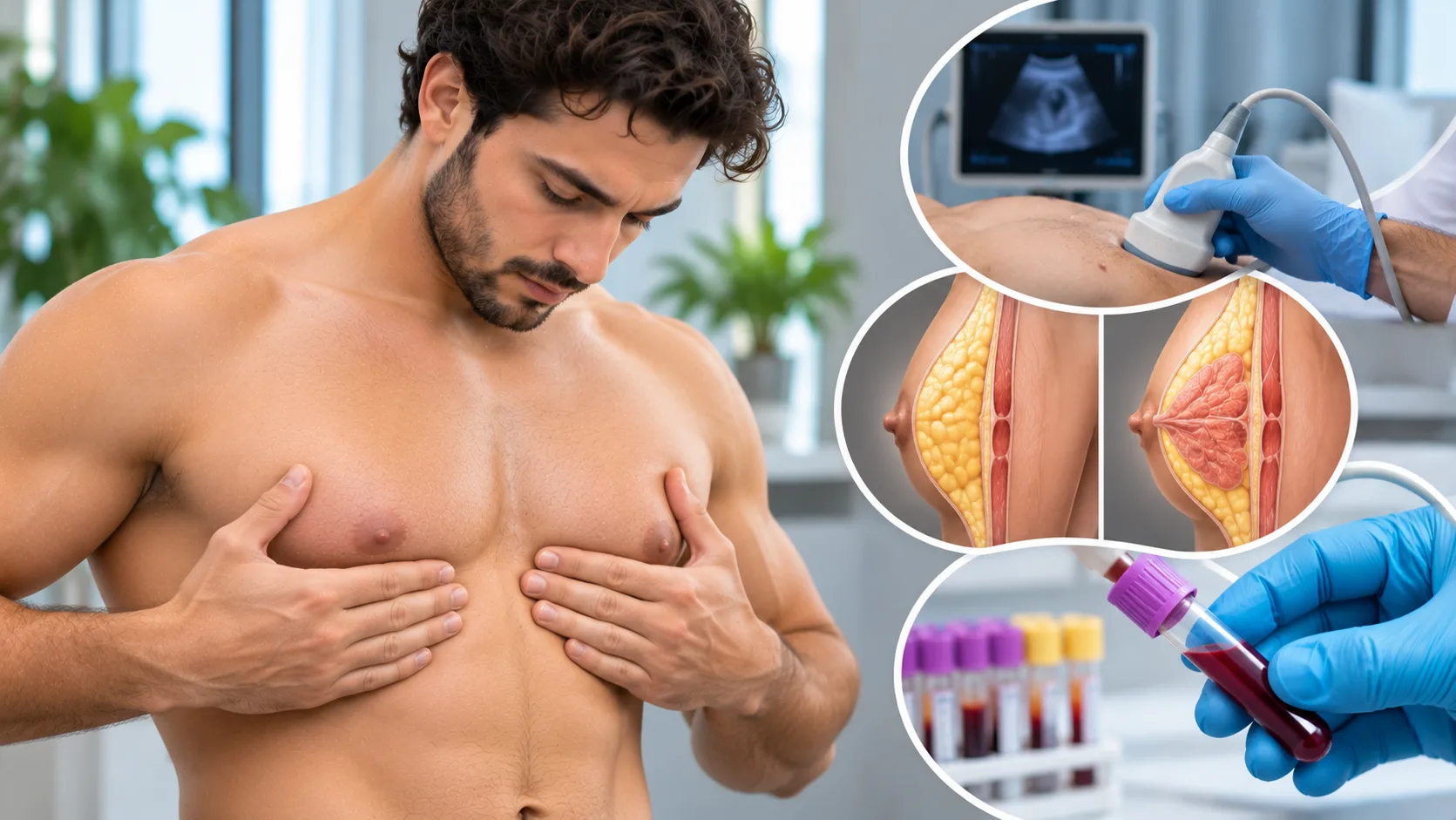
Gynecomastia Test: Self-Check, Ultrasound & Blood Tests Explained
There is no single gynecomastia test. Learn the self-check, blood tests and ultrasound doctors use, how to tell fat from glandular tissue, and when to see a doctor.

Why Won't My Man Boobs Go Away? 7 Reasons You Can't Lose Man Breast Fat Even After Weight Loss
Stuck chest tissue after dieting? Discover seven common reasons weight loss may not shrink it, how to tell fat from gland, and when a doctor or surgeon should take a look.