
How to Get Rid of Man Breasts Without Surgery: What Works and What Doesn't
Diet and exercise can reduce chest fat, but they cannot remove glandular tissue. Here is what works, what doesn't, and when a surgeon's opinion makes sense.

If you are searching for how to get rid of man breasts without surgery, the honest answer depends on what is making your chest look fuller. Extra chest fat can often be reduced with weight loss and a sensible training plan. Enlarged glandular tissue, the firm disc directly behind the nipple, usually does not shrink with diet or exercise alone. This guide explains which non-surgical methods have a realistic chance of helping, which popular products are mostly marketing, and why timing matters.
If you want a side-by-side view of diet, exercise, medication and surgery, our guide to how to get rid of man breasts ranks every option in one place. This article goes deeper on the non-surgical side and on the point where those methods stop being enough.
Key takeaways
- Fatty chest enlargement (pseudogynecomastia) can improve with weight loss. Glandular tissue usually does not shrink with lifestyle changes alone.
- Chest training builds the muscle under the breast and can make the chest look firmer, but it cannot remove gland or spot-reduce fat.
- Creams, supplements, gadgets and 'chest toning' products have no good evidence behind them for reducing glandular tissue.
- Anabolic steroids, prohormones, some medicines and heavy alcohol use can contribute. Never stop a prescribed medicine on your own.
- Enlargement that has lasted around a year or more becomes less likely to settle with lifestyle changes, because glandular tissue can become firmer over time.
- If a firm area remains after consistent effort, a clinical assessment, including a free photo review, can show whether surgery may be relevant.
Can You Get Rid of Man Breasts Without Surgery?
Sometimes, but only partly, and only when the enlargement is caused mainly by fat rather than gland. Weight loss and strength training can reduce fatty chest tissue and make the chest look flatter and firmer. They cannot remove glandular tissue, which is a separate structure sitting beneath the nipple and areola.
Many men assume their chest is just fat because it feels soft. Gland can sit under a layer of fat, though, so the first useful question is not 'what can I do?' but 'what is the tissue made of?' The answer determines which non-surgical steps have any chance of working and when it is time to see a specialist.
Fat or gland: why the difference matters
Most men cannot tell the two apart by looking in the mirror. The table below summarizes the main differences. A doctor or surgeon can usually tell by examining the chest, and sometimes with imaging or tests.
| Feature | Fatty tissue (pseudogynecomastia) | Glandular tissue (gynecomastia) |
|---|---|---|
| How it feels | Soft, spread across the chest, no firm area under the nipple | Firm, rubbery or disc-shaped area directly behind the nipple, sometimes tender |
| Typical link | Overall weight gain and higher body fat | Hormone balance changes, medicines, substances, or sometimes no clear cause |
| Response to weight loss | Often reduces visibly | Often changes little, although the overall chest may look flatter |
| Response to exercise | Chest muscle may look firmer once fat drops | Exercise does not remove the gland |
| Surgical option | Liposuction, for example VASER | Gland removal, often combined with liposuction |
Gland and fat often coexist. A chest may have a firm core behind the nipple with extra fat around it. In that case, weight loss may flatten the outer area while the firm core stays. This mixed picture is common enough that a proper examination is worth the time, because it shows whether lifestyle changes are likely to do most of the work or only part of it.
How a doctor tells the difference
A clinician usually starts with your history: when the change began, whether it has grown, any medicines, supplements or substances you use, and any recent weight change. Next comes an examination of both breasts, the nipples and the surrounding skin. Depending on the findings, a doctor may order blood tests to check hormone levels, liver and kidney function, and thyroid function, and may occasionally use imaging.
Do not be surprised if the questions feel personal. Doctors ask about alcohol, cannabis, supplements and gym products because each one can change the picture. Honest answers give your doctor the information needed to protect your health.
See a doctor promptly if…
- you feel a hard or fixed lump in the chest
- a lump on one side only is growing
- you notice nipple discharge, including blood-stained discharge, or nipple bleeding
- the skin over the chest is dimpling, puckering or changing
- you have chest pain together with breathlessness: call emergency services straight away
Most cases of enlarged male breasts are not dangerous, but these signs need proper assessment because a small number of causes are serious.
What Causes Man Breasts?
Gynecomastia happens when glandular tissue in the male breast grows. It is usually linked to a shift in the balance between estrogen and androgens (male hormones). According to a review in the New England Journal of Medicine, it can have many causes, and in some men no single trigger is found. Identifying the cause matters because it shapes which options are worth considering.
Common triggers
- Puberty and older age. Hormone levels shift at these life stages. Enlargement in teenagers often settles over time, as explained in the teenage section below.
- Weight gain. Body fat contains an enzyme that converts male hormones into estrogen, which can contribute to chest enlargement. This is one reason fat loss can help in mostly fatty cases.
- Medicines. A number of prescription drugs can contribute, including some used for heart, stomach, mood and hormone-related conditions. If you suspect a medicine, ask your prescriber rather than stopping it yourself.
- Anabolic steroids and prohormones. These are a well-known cause, especially in men who use them for muscle building.
- Alcohol and some recreational drugs. Heavy drinking affects the liver and hormone balance, and some recreational drugs are linked with gynecomastia.
- Underlying medical conditions. Liver disease, kidney disease, thyroid problems and low testosterone can all play a role. Rarely, a hormone-producing tumor is the cause, which is one reason a medical check is worthwhile.
Why the cause changes your options
If a medicine, substance or condition is driving the change, addressing it may help. If no clear cause is found, or the glandular tissue has been present for a long time, non-surgical options are more limited. That is why a proper history, examination and, where needed, blood tests matter before you rely on any single approach.
A cause you can change is a reason for cautious optimism. A long-standing, firm area with no identifiable cause is a reason to get a clinical opinion sooner rather than later.
Is It Normal for Teenagers to Have Man Boobs?
Chest enlargement is common during puberty, and in many teenage boys it is temporary. Hormone levels shift during growth, and tender or swollen breast tissue may appear on one or both sides and then settle without treatment. Because the body is still changing, doctors usually prefer to monitor for a period before deciding whether anything else is needed.
Watching is not the same as ignoring. A lump on one side only, a hard or fixed lump, or swelling that keeps growing needs a doctor's assessment rather than a wait at home. The warning signs listed earlier in this article apply to teenagers as well.
Teenagers should not buy creams, supplements or 'testosterone boosters' to address chest changes, and should not start or stop any medicine without a doctor. Surgery is not a routine option for under-18s. Gynecomastia Turkey's criteria allow men aged 16 or 17 to be considered only with parental consent and a gland that has been stable for at least two years, a stricter bar than for adults.
How to Get Rid of Man Breasts Without Surgery: What Actually Works
Four non-surgical approaches have a logical basis: gradual weight loss, strength training, stopping or reducing substances that disrupt hormones, and reviewing your medicines with a doctor. Each works differently, and none of them removes glandular tissue on its own. Used together, they can improve the chest, especially when the enlargement is mostly fat.
How to lose man breast fat at home: the weight-loss basics
Losing body fat is the most reliable non-surgical step for men whose enlargement is mainly fatty. You cannot choose where fat leaves the body, so the chest responds when overall body fat drops. As it does, the chest often looks flatter and the outline sharpens. For a realistic timeline of how quickly this can happen, see our guide to get rid of man breasts fast.
The approach that tends to work is a moderate, sustained calorie deficit, with enough protein, plenty of vegetables and regular movement. A pace of roughly 0.5 to 1 kg (about 1 to 2 lb) a week is commonly recommended as sustainable for many adults. Smaller, consistent changes beat dramatic ones that you cannot keep up.
Practical habits that make the deficit easier to sustain:
- Include a source of protein at each meal, which helps you keep muscle while losing fat.
- Check liquid calories. Sugary drinks, beer and mixed spirits can add a surprising amount of energy without filling you up.
- Weigh yourself once a week, at the same time of day, and track your waist measurement alongside it.
- Plan for weekends and travel, because plans often break down away from a routine kitchen.
Crash diets are not a good idea. They can cost muscle, leave you struggling to keep going, and some people who lose weight quickly develop gallstones. If you have diabetes, heart disease or kidney disease, or take regular medicines, speak to your doctor before making a significant change to your diet.
Men with glandular tissue often notice that the chest looks flatter overall, but the firm area directly behind the nipple usually stays. That is the point where weight loss stops being the whole answer.
Strength training to build and firm the chest
Chest exercises build the pectoral muscle that sits beneath the breast tissue. This can give a firmer, more defined look, particularly when the enlargement is mostly fat. Strength training does not reduce gland, and it cannot spot-reduce fat anywhere on the body.
Useful movements include push-ups (or incline push-ups if the standard version is too hard), dumbbell or barbell presses, dumbbell or cable flyes, rows, and pull-ups or assisted pull-downs. Back work matters as much as chest work, because it balances the shoulders and supports better posture. Training two to four times a week, with gradual increases in weight or reps, is a realistic target for most men.
Strength training works best alongside weight loss and realistic expectations. For a detailed breakdown of which movements help and where they stop being useful, read our guide to getting rid of man breast with workouts.
Stopping anabolic steroids and prohormones
Anabolic steroids and prohormones are a well-known cause of gynecomastia, and stopping them is one of the few steps that can make a real difference for some men. Recovery is not guaranteed and can take months. Hormone recovery is slow and is best followed with a doctor, so if you use these products, speak to a medical professional rather than stopping and restarting on your own.
Gynecomastia Turkey requires men to be off anabolic steroids and prohormones for at least three months before surgery. That is a surgical requirement set by the clinic, not a home treatment plan, and it does not replace medical advice.
Cutting back on alcohol
Heavy drinking affects the liver, which plays a role in how hormones are processed, and alcohol adds calories that can build fat around the chest. Reducing alcohol is a practical step for overall health and may support chest changes.
Alcohol is unlikely to be the only factor for most men, and cutting back is unlikely to remove established gland on its own. It is still one of the easier factors to control. A useful test is to log every drink for two weeks, then decide whether to cut back, stop, or ask a doctor for support.
Reviewing your medicines with a doctor
If you take a medicine that may be linked to chest enlargement, do not stop it on your own. Ask your GP or prescribing doctor whether it could be a factor and whether a different medicine would be suitable. Bring a complete list to the appointment, including over-the-counter products and supplements, because these are easy to forget and can matter.
Many men only learn that a medicine may be involved after a conversation with their prescriber. Any change can be made safely under supervision, and sometimes the answer is that the medicine is necessary and the chest change is managed another way.
Treating an underlying condition
Where a condition such as a thyroid problem, liver or kidney disease, or low testosterone is involved, treating that condition is the medical priority. Your doctor can explain whether this may help the chest and how long you might expect to wait for a change. This is a clinical decision, not something to address with supplements found online.
Sleep, stress and routine
Poor sleep and high stress make it harder to keep up a calorie plan and a training routine. Regular meals and a consistent bedtime help many men stay on track. These habits support the other steps rather than acting as treatments in their own right.
What Doesn't Work: Creams, Supplements and Gadgets
Most products sold for man breasts have no good evidence behind them for reducing glandular tissue. Some may make you feel you are doing something, but they cost money, can delay a proper assessment, and may carry risks. Here is what to know about the most common claims.
Fat-burning creams and chest-toning gels
Creams and gels cannot reduce fat or gland in the chest in any meaningful way. Their effects are usually limited to skin feel, a temporary warming or tightening sensation, or a slight change in appearance from moisturizing. The gland sits beneath the skin and nipple, and no topical product has been shown to shrink it.
Supplements and 'natural testosterone boosters'
Supplements are often marketed with bold claims but are poorly regulated in many countries. Some products have been found to contain ingredients that are not listed on the label, and few have good evidence for changing breast tissue. Check with a doctor or pharmacist before taking any supplement, especially if you take other medicines or have a health condition.
If low testosterone is a genuine concern, that is a question for a doctor who can test it, not a reason to buy a booster.
Spot-reduction exercises and chest-fat workouts
You cannot choose where fat is lost. Crunches, push-up challenges and routines marketed as chest-fat burners do not target the chest in particular. Exercise helps overall body fat and muscle, but it will not remove a chest area on its own. A workout that promises a targeted result is selling a method the body does not offer.
Compression garments and shapewear
Tight tops and shapewear can smooth the outline temporarily, which may feel reassuring on a night out. They do not treat the cause. After surgery, a compression vest is used as part of recovery to support healing and manage swelling, which is a different purpose from everyday wear. Keep shapewear for specific occasions rather than wearing it all day.
Massage, vibration, cupping and similar devices
There is no reliable evidence that massage, vibration plates, cupping or electrical muscle stimulation reduce glandular tissue in the chest. If a device is sold on the basis that it will shrink the gland, treat that claim with caution. Some devices can also cause bruising or skin irritation, and none of them replaces an examination.
How to check a product claim before you buy
A few questions can filter out most of the noise:
- Does it promise to shrink the gland, or only to 'tone' or 'burn' chest fat? A product cannot dissolve gland.
- Does it rely on testimonials, before-and-after images without context, or a 'secret' ingredient rather than published evidence?
- Does the label list every ingredient and dose, and does the seller explain who should not use it?
- Does the seller encourage you to buy instead of seeing a doctor, or to stop a medicine?
If the answer to the last question is yes, or the product asks you to skip a medical check, walk away.
Medication: What Doctors May Consider
Doctors may consider medication in some situations, particularly when gynecomastia is recent and linked to a hormone problem or a specific drug. Medication is not a standard fix for long-standing gynecomastia, and every option carries side effects that need specialist oversight. Evidence for drug treatment in established gynecomastia is limited, so doctors weigh benefits against risks case by case.
Doctors who manage hormone problems, usually GPs, endocrinologists or other specialists, make these decisions. Medicines of this kind are prescribed for specific situations, can have side effects, and are not suitable for everyone. Doctors often address the underlying trigger, such as a medicine or substance, before considering any drug directly.
Never start, change or stop a hormone-related medicine based on something you read online. If a doctor offers a medicine, ask:
- What is it expected to do, and how long will it take to show a change?
- What are the common and serious side effects?
- How will progress be checked?
- What is the plan if it does not help?
For most men, the first step is a GP appointment, which can include examination and basic tests. A referral to an endocrinologist or a surgeon may follow, depending on the findings.
Does Man Boob Tissue Go Away on Its Own?
Sometimes, particularly in teenagers, enlargement settles without treatment. In adults, enlargement that has lasted around a year or longer is less likely to settle with lifestyle changes alone. Clinicians often describe a rough one-year point for this reason, because glandular tissue can become more fibrous and firmer over time, and diet and exercise do not remove it.
Why time changes the picture
Over months and years, glandular tissue can become firmer and more fibrous. Fibrous tissue responds less to weight loss and training, which is why a chest that has been enlarged for a long time may change little even with consistent effort. This is a general pattern rather than a fixed deadline, and not every man follows it. A doctor is the right person to judge where you are.
What waiting actually costs you
The main cost of waiting is not physical. It is spending another year on methods that cannot remove gland, while the options that remain become narrower. A chest that has been enlarged for a year or more, with a firm area that has not changed despite consistent effort, benefits from a clinical opinion now rather than later. Waiting indefinitely is rarely the best plan.
How Long Do Non-Surgical Options Take to Work?
The table below compares the main options by what they can change, how long they usually take to show a difference, and their main limit. Timings are general estimates. They vary by person, by body fat level, and by how consistently the approach is followed.
| Option | What it can change | Typical time before a difference shows | Main limit |
|---|---|---|---|
| Weight loss | Chest fat and overall chest outline | Several weeks to a few months | Does not remove glandular tissue |
| Strength training | Chest muscle definition and posture | Several weeks to a few months | Cannot reduce gland or spot-reduce fat |
| Stopping steroids or prohormones | May reduce gland in some men | Months; not guaranteed | Only relevant if you use these products |
| Cutting back on alcohol | Overall weight and hormone balance | Weeks to months | Limited effect on established gland alone |
| Doctor-led medication | Can help in selected, often recent, cases | Varies; your doctor monitors progress | Side effects; not suitable for everyone |
| Creams, supplements, gadgets | Nothing reliable | Not applicable | No good evidence |
| Surgery | Removes gland and/or fat | Final result after 3–6 months | Surgical risks, recovery time, cost |
The non-surgical options are most useful when fat is driving the enlargement. Once firm gland is established, surgery is the option that reliably removes it. Expecting the table to show a fast fix is the most common source of frustration, so set a 12-week review point rather than judging each week.
How to Get Rid of Man Breasts at Home: A 90-Day Plan
If you are asking how to get rid of man breasts without surgery at home, a realistic plan focuses on fat loss, strength training and healthy habits, tracked with photos and measurements. Over about three months, you can expect changes in fat and muscle definition. Do not expect the removal of gland.
Before starting any new diet or exercise program, check with your doctor if you have a heart condition, a joint problem, or take regular medicines.
Weeks 1–2: Set a baseline
- Take front and side photos each week, in the same light, at the same time of day, and in similar clothing or none. Consistency matters more than the camera.
- Record your body weight, waist measurement and chest measurement. Measure the chest with the tape around the body at nipple level, relaxed, on the same day each week.
- Book a check-up if you have not had one recently, and bring a list of every medicine, supplement and substance you use.
- Set a sustainable calorie target with your doctor if you have a health condition.
Weeks 3–6: Build the habits
- Eat protein with each meal, plus vegetables and whole grains, and keep an eye on portion sizes.
- Strength train two to four times a week, covering push-ups, dumbbell presses, rows and pull-ups, and increase weight or reps gradually.
- Reduce alcohol and aim for regular sleep, commonly seven to nine hours for adults.
- Compare progress with your baseline each week, not just on the scale.
Weeks 7–12: Review and decide
- Compare photos and measurements side by side. If your chest looks flatter or your waist has come down, continue the plan.
- If the firm area is unchanged after 12 weeks of consistent effort, it is more likely to be gland. That is a reason to see a doctor or surgeon for a clinical opinion.
- At any point, see a doctor if you notice a warning sign listed earlier in this article.
How to judge progress fairly
Chest measurements fluctuate with water retention, meals and time of day, so a single reading means little. Look at the trend over three to four weeks. Photos from the same angle and in the same light are more useful than memory, because the eye adapts to gradual change. If the trend is flat for a month while you follow the plan closely, that is information too.
Why Your Chest May Look Worse Than It Is
Some changes in appearance have nothing to do with the tissue itself. Tight tops and fitted T-shirts show the outline of the chest, while looser layers make it less obvious. Wide-angle selfies taken from above exaggerate the chest, while straight-on photos in even light show it more accurately.
Posture matters too. Rounded shoulders and a slumped position can make the chest look fuller, while standing tall and training the upper back can change the outline. Bloating after large or salty meals can add temporary volume. None of these fixes the underlying tissue, but they help you judge progress honestly and avoid misreading a photo.
Why Is One Side Bigger Than the Other?
Asymmetry is common, and very few chests are identical. A mild difference between sides does not on its own mean something is wrong. Enlargement that is clearly larger on one side, however, deserves attention, particularly if it is firm, fixed or growing.
A surgeon examining both sides will look at the difference in size, shape and skin, because asymmetry is one of the outcomes a plan needs to address. A one-sided lump that is growing is not something to monitor at home. Review the warning signs above, and see a doctor promptly if any of them apply.
When Non-Surgical Options Are Not Enough: Understanding Grades
Non-surgical options are most useful for mild, fat-dominant enlargement. Moderate and larger cases, and any case with loose or excess skin, usually need surgery to achieve a meaningful change. The Simon classification is widely used to describe the grade of gynecomastia from I to IV. It is a useful shorthand, but it does not replace an examination.
| Grade | What it typically looks like | General surgical approach |
|---|---|---|
| I | Small, localized enlargement around the areola, little or no excess skin | Liposuction alone if the gland is absent; liposuction with gland removal if present |
| II | Moderate enlargement extending beyond the areola, skin usually adapts | Liposuction with gland removal |
| III | Marked enlargement with some excess skin | Gland removal with skin tightening; nipple repositioning may be needed |
| IV | Marked enlargement with excess skin and sagging | Gland removal with skin tightening and nipple repositioning |
The grade helps determine the approach, which is why an assessment should look at your chest in person or through photos taken from several angles. Skin quality matters as much as the amount of tissue, which is why the higher-grade packages include skin tightening and nipple repositioning. Your surgeon will confirm the grade and recommend a technique. The table is a general guide, not a diagnosis.
Gynecomastia Surgery in Turkey: What the Option Looks Like
If non-surgical methods have not made a difference, surgery is the reliable way to remove glandular tissue. The main approach used at Gynecomastia Turkey is VASER liposuction, combined with gland removal when needed. Surgery is performed under general anesthesia and typically takes one to two hours.
The clinic is based in Etiler, Istanbul, and surgery takes place in JCI-accredited private hospitals in Istanbul and Ankara. If you are comparing options abroad, our page on gynecomastia surgery in Turkey explains how the clinic works. Before and after photos show a range of outcomes, but they are not a promise of your result, so review them alongside a proper consultation: see gynecomastia before and after photos.
How VASER liposuction and gland removal fit together
VASER uses ultrasound energy to loosen fat, which is then removed through a small tube called a cannula. Gland is a different tissue and is removed separately when it is present, through incisions the surgeon chooses for your case. The combination is what makes surgery suitable for mixed enlargement, where both fat and gland are involved.
The package list includes a Hi-Def VASER option alongside standard VASER. Ask your surgeon how it differs from standard VASER for your case, because the right choice depends on your chest rather than the package name.
Package prices for 2026
All packages are all-inclusive, with flights excluded.
| Package | Typically suited to (general guide) | Price |
|---|---|---|
| VASER liposuction only | Grade I, pseudogynecomastia | $2,500 |
| VASER + gland excision | Grade I–II; the most popular package | $3,000 |
| Hi-Def VASER + excision | Gland excision with Hi-Def VASER; your surgeon confirms fit | $3,500 |
| Grade III–IV with skin tightening and nipple repositioning | Grade III–IV with excess skin | $4,200 (1 hospital night) |
| Gynecomastia + full-torso VASER | Gland excision plus liposuction across the torso | $5,500 |
For comparison, typical home prices quoted on the clinic website are about $8,000 in the USA and £5,500–6,500 in the UK. These are typical quotes, not a guarantee of what you would pay, so compare what each quote includes rather than the headline figure alone.
What the package includes
- The surgery itself, the anesthesiologist, and hospital care
- Three to five nights in a 5-star hotel
- VIP transfers and a translator
- A compression vest, medications, and pre-operative tests
- Histology, which is laboratory analysis of the removed tissue
- Nurse visits on days 2 and 3
- Video follow-ups at weeks 1, 2, 4 and 8
- Lifetime WhatsApp aftercare
The trip and recovery timeline
The typical trip lasts four to six days. Most patients fly home on day three or four, and grade III–IV patients on day five or six. The grade III–IV package includes one hospital night. Recovery follows a general pattern, though your surgeon's instructions for your own case take priority.
| Activity | Typical timing |
|---|---|
| Desk work | About 5–7 days |
| Lower-body gym work | About 2 weeks |
| Chest training | About 4–6 weeks |
| Compression vest | About 4–6 weeks |
| Final result | 3–6 months |
What happens on the day and after
On the day of surgery you are under general anesthesia for one to two hours. A compression vest is worn during recovery. Nurses visit on days 2 and 3, and video follow-ups at weeks 1, 2, 4 and 8 let the surgical team check healing from a distance. Lifetime WhatsApp aftercare covers questions after you return home.
When you are back home, arrange local follow-up for any concerns. Lifetime WhatsApp aftercare helps with questions but does not replace in-person care for an urgent problem. If you develop fever, heavy bleeding, sudden severe pain or breathing problems, seek urgent medical care immediately, wherever you are.
Who is a candidate?
- You are aged 18 or over. Men aged 16 or 17 may be considered only with parental consent and a gland that has been stable for at least two years.
- Your weight has been stable for at least six months.
- You have been off anabolic steroids and prohormones for at least three months.
- You have not smoked for four weeks before surgery or for four weeks after it.
A surgeon will check whether these apply to you and whether surgery is appropriate for your health. Weight stability matters because a chest that is still changing is hard to judge, and a surgeon needs a settled baseline to plan your result.
Risks and realistic expectations
Surgery carries risks. These include bleeding, infection, scarring, asymmetry, uneven contour, changes in nipple sensation, and the risks of anesthesia. Some men need a second procedure, known as revision. The NHS explains the procedure and its risks on its male breast reduction page, which is a useful starting point whichever clinic you consider.
Gynecomastia Turkey reports figures from an internal audit that has not been peer-reviewed: more than 5,000 procedures, a revision rate under 1%, 98% patient satisfaction, a 4.9/5 rating, and patients from more than 50 countries. These are the clinic's own internal figures, not independent verification. The hospitals used are JCI-accredited.
Realistic expectations matter. Surgery can improve the chest outline considerably, but it may not produce a completely flat or perfectly symmetrical chest. The final result takes three to six months to settle, and scars mature over that time.
What Happens at a Photo Assessment?
The first step is simple. You send two photos of your chest, one from the front and one from the side, to the clinic. A surgeon reviews them and provides a fixed quote within 24 hours. The assessment is free and carries no obligation.
The photos can help estimate the likely grade, whether fat or gland seems more prominent, and how much skin may be involved. They cannot confirm the cause of the enlargement, rule out a medical condition, or guarantee a result. Those need an examination, and a doctor should assess any warning sign listed earlier before you do anything else.
Tips for clear photos:
- Use daylight or bright, even indoor light, and avoid harsh shadows.
- Stand against a plain background with your arms relaxed at your sides.
- Take the front photo straight on at chest height, and the side photo with your body turned to show the profile.
- Keep the same distance for both photos and include your torso from the shoulders to the waistline.
- Do not hold the phone above you, because this distorts proportions.
Next Step: Get a Free Photo Assessment
If you are still asking how to get rid of man breasts without surgery, the most useful next step is to find out where you stand. Start with honest photos and, if the firm area is still there after consistent effort, book a clinical opinion. Waiting another year costs you time on methods that cannot remove gland.
You can contact the team on WhatsApp at +90 505 026 5581 or by email at info@gynecomastiasurgeryturkey.com. Ask any question before you send photos, including what the quote covers and how the trip is organized.
Frequently asked questions
Straight answers from our surgical team.
How do I get rid of man breasts at home?
Can you get rid of man breasts without surgery?
How do I lose man breast fat at home?
Does gynecomastia go away on its own?
Do chest exercises get rid of man boobs?
Can supplements or creams reduce man breasts?
How do I know if it is fat or gland?
Get your free surgical assessment
Send two chest photos (front and side). A board-certified surgeon reviews them and you receive a personal plan and an exact all-inclusive price within 24 hours.
No obligation. Your photos are deleted on request. or call +90 505 026 5581
- 1.Send photos
- 2.Surgeon review
- 3.Fixed quote in 24h
This guide is for educational purposes and does not replace a consultation with a qualified surgeon.
Related guides
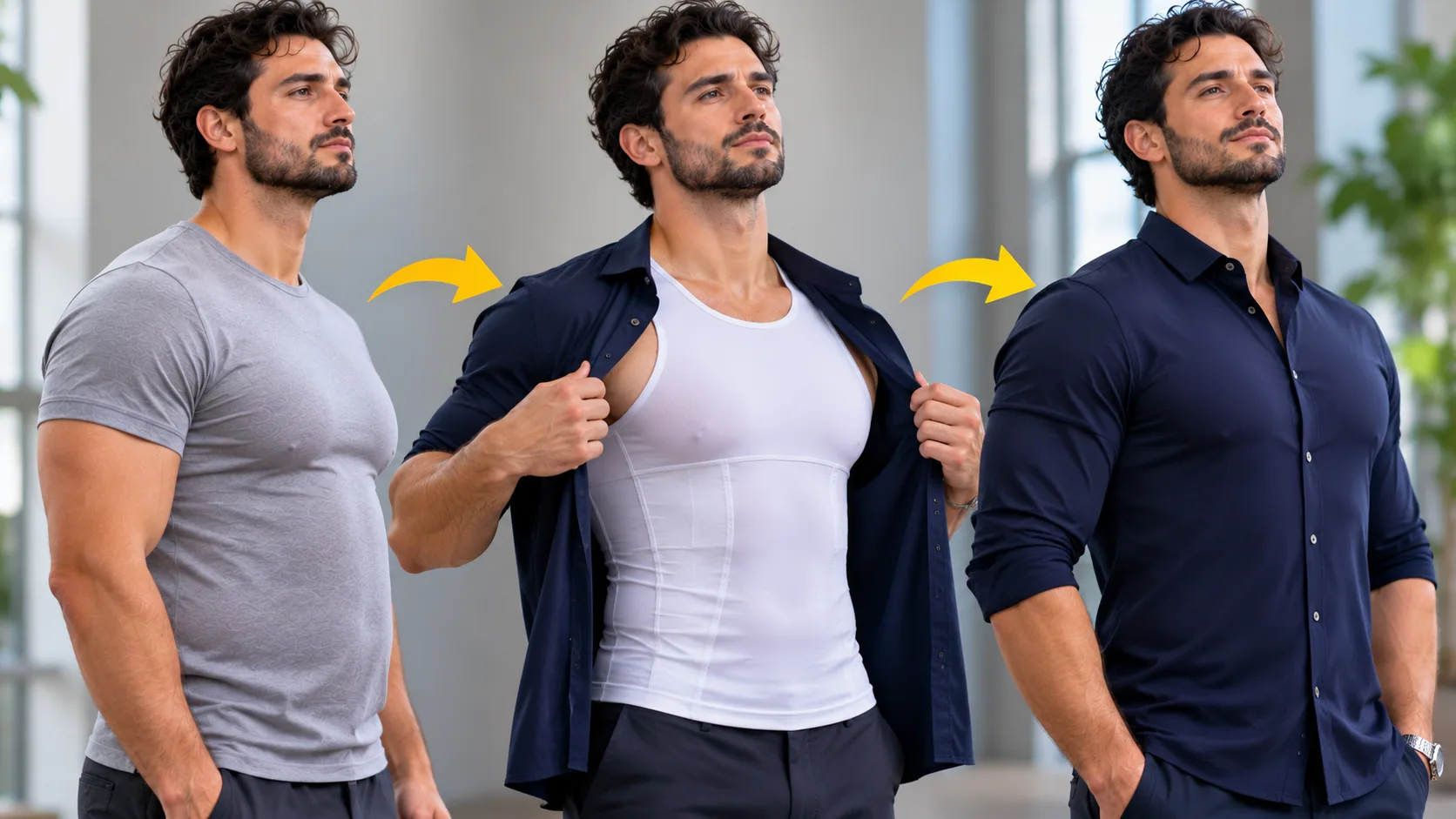
How to Hide Man Breasts: Clothing, Compression Shirts and Posture Tips
Clothing, compression tops and posture can hide man breasts in everyday life, but they don't change the tissue. Here's what works, what doesn't, and when surgery may be worth weighing up.
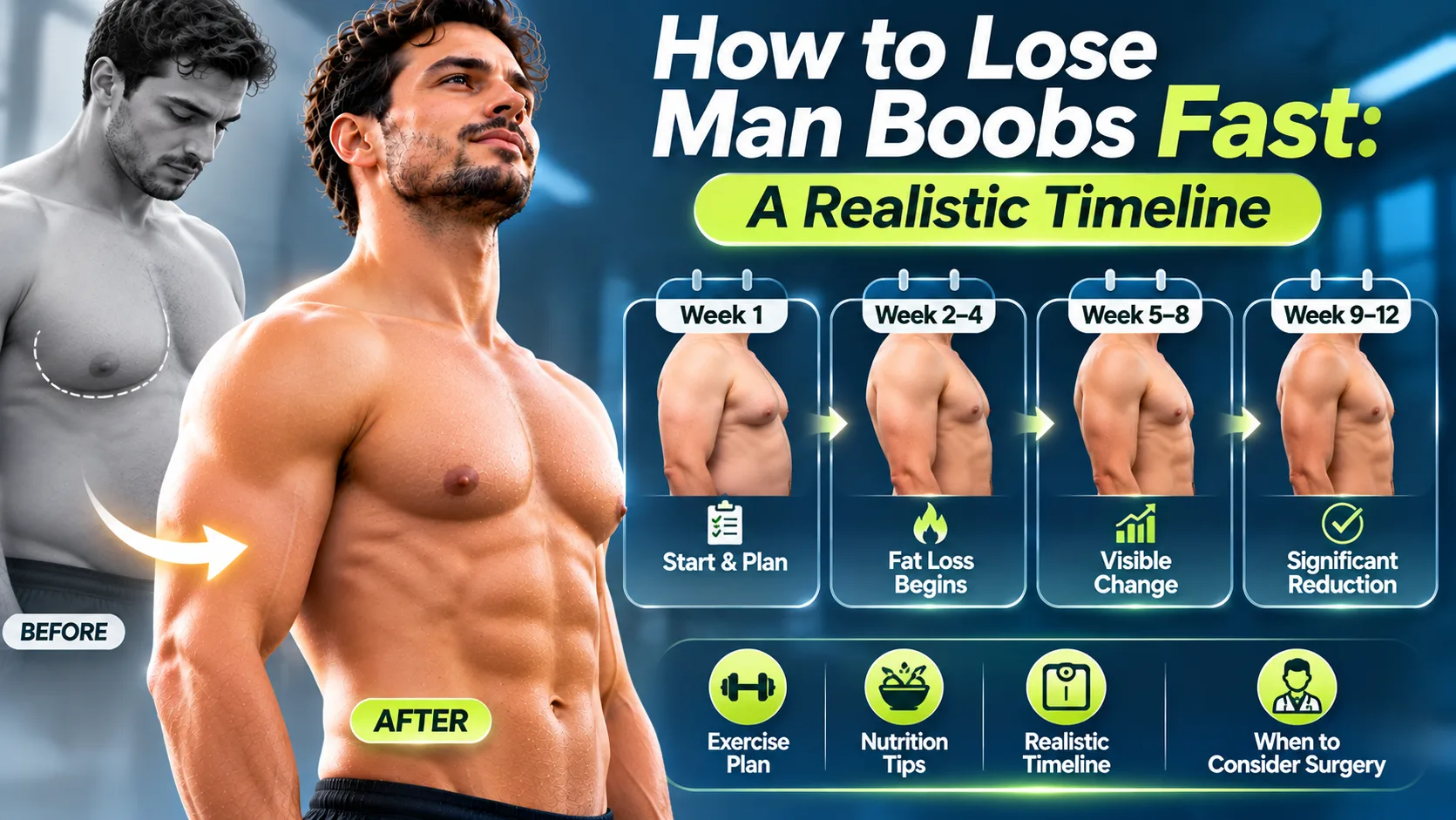
How to Get Rid of Man Breasts Fast: A Realistic Timeline
Realistic timelines for losing chest fat versus gland tissue, what diet and exercise can and can't do, and why surgery is often the fastest reliable route.
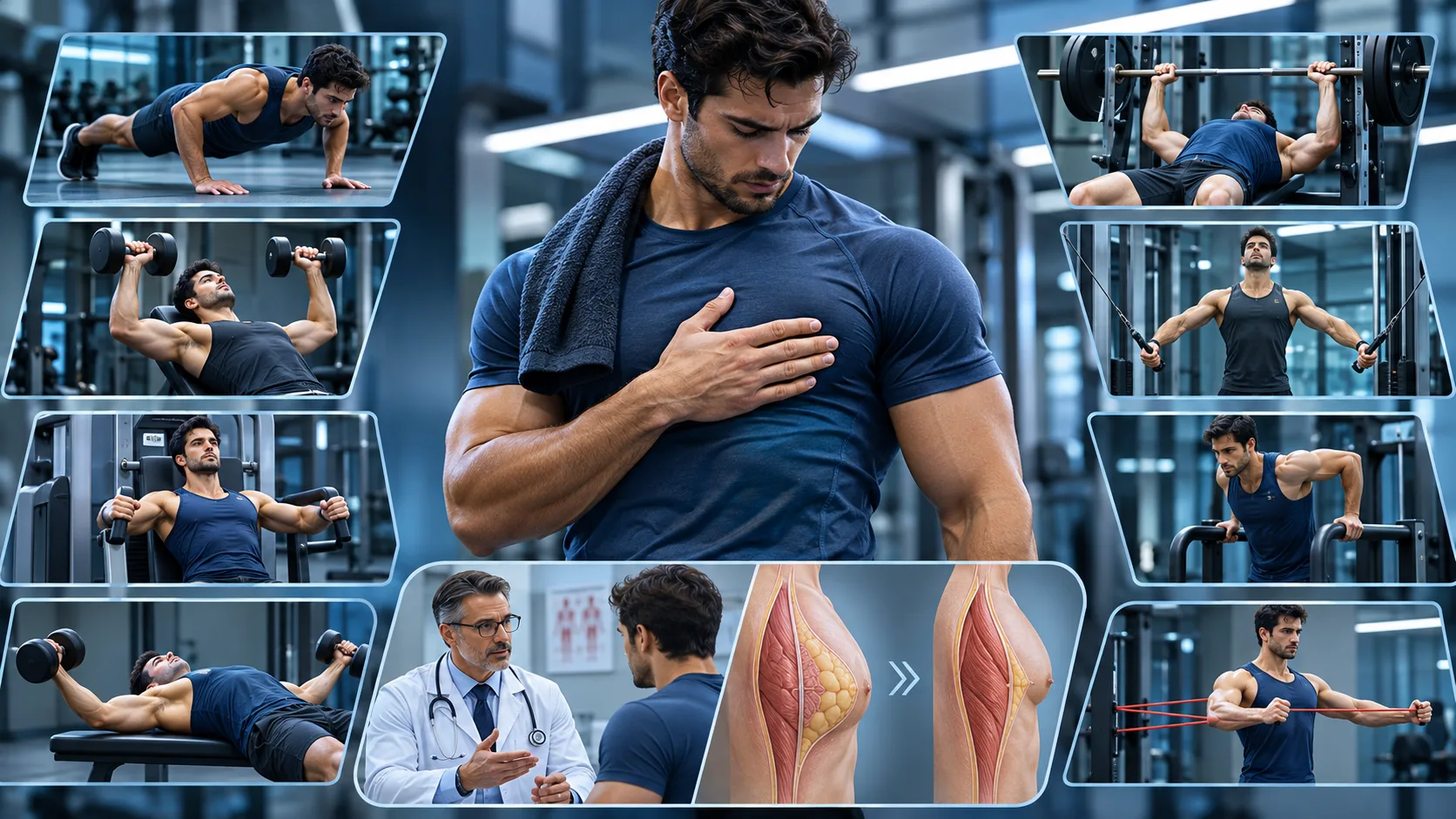
Getting Rid of Man Breast with Workouts: 8 Chest Exercises and Their Limits
Chest workouts can firm the muscle under the breast but cannot shrink breast gland. Learn the 8 best exercises, a 3-month test to tell fat from gland, and when to get assessed.