
How to Hide Man Breasts: Clothing, Compression Shirts and Posture Tips
Clothing, compression tops and posture can hide man breasts in everyday life, but they don't change the tissue. Here's what works, what doesn't, and when surgery may be worth weighing up.
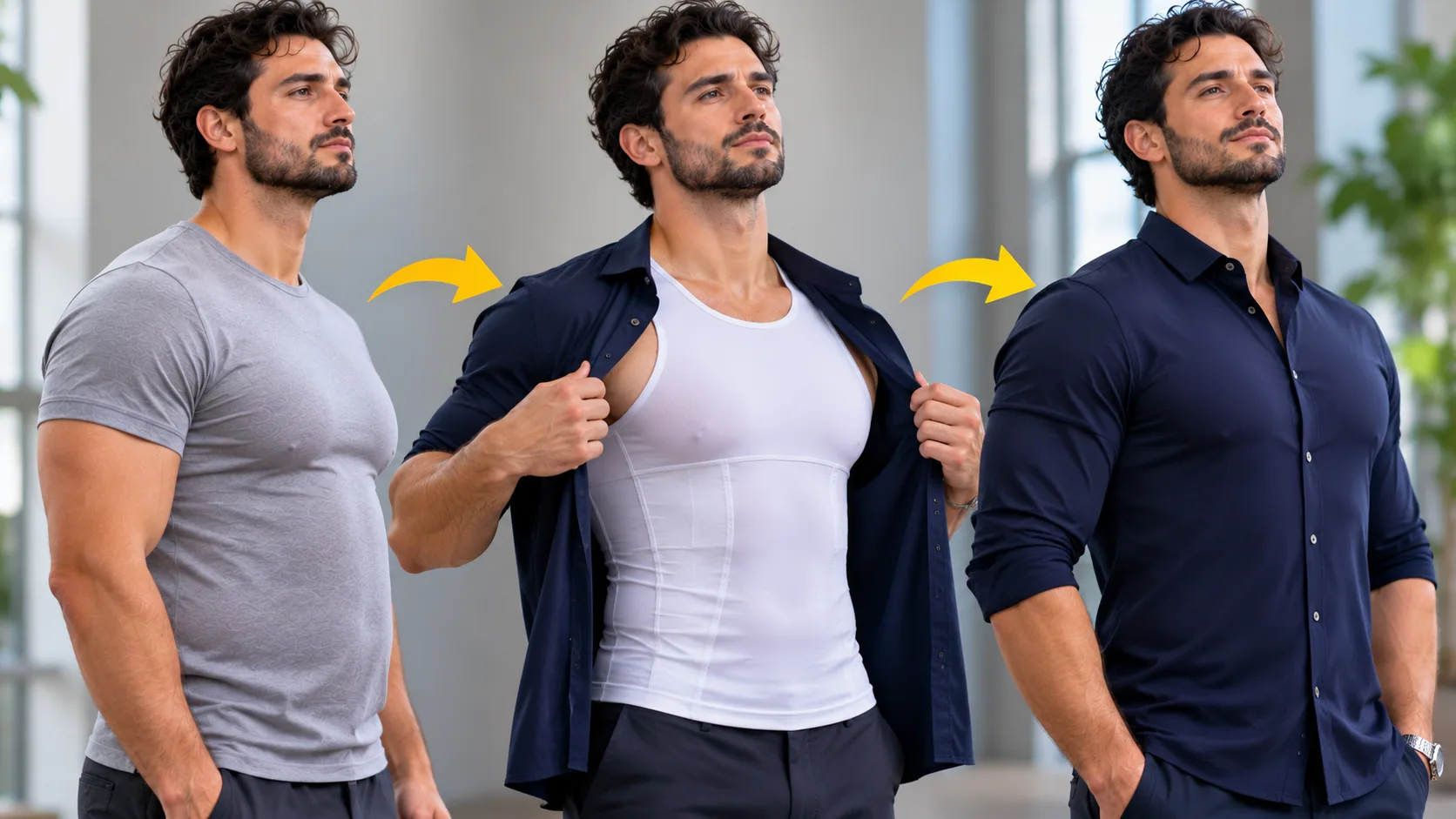
You can hide man breasts today with the right clothes, a well-fitted compression top and everyday posture habits. None of these change the breast tissue itself, so the effect lasts only while you wear them and keep your posture. This guide explains what each method does, where it falls short, and when a permanent option may be worth weighing up. If you want to compare every approach, from diet to surgery, read our full guide on how to get rid of man breasts first.
Key takeaways
- Clothing and posture can hide man breasts within minutes, but they do not change the breast tissue underneath.
- Fitted, dark, matte fabrics with a V-neck or open collar tend to hide the chest best. Thin, shiny, pale or tight fabrics show it most.
- Compression tops smooth the outline while you wear them. They do not reduce tissue, and a top that is too tight can cause real discomfort.
- Better posture and chest and back training can improve how your chest looks, but building muscle will not shrink glandular tissue.
- Hiding is a daily routine. Surgery is a planned trip of 4–6 days followed by recovery, and the right choice depends on the cause and the type of tissue.
- See a doctor promptly for a hard or fixed lump, a one-sided lump that is growing, nipple discharge or bleeding, or skin dimpling.
What Does It Mean to Hide Man Breasts?
Hiding man breasts means changing how the chest looks, using clothing, fit, posture and training, without altering the tissue that causes the change. It is a practical short-term tool that manages appearance rather than treating the cause.
Enlarged male breasts are known medically as gynecomastia. It is common and can affect men at many stages of life. A review in the New England Journal of Medicine describes several causes, including shifts in the balance of hormones, certain medicines, some health conditions and anabolic steroids. Knowing which cause applies to you matters, because it shapes which options are realistic.
Glandular tissue and fatty tissue
Two kinds of change can look alike from the outside. In gynecomastia, the enlargement involves glandular breast tissue. In pseudogynecomastia, the chest is enlarged mainly by fat, with little or no gland.
Doctors often describe glandular enlargement as a firm, rubbery area directly behind the nipple, while fatty enlargement tends to feel softer and spread more evenly across the chest. These are general descriptions, not a way to diagnose yourself. A doctor or surgeon can examine you and tell which type you have.
Why does this matter for hiding? Clothing and posture change how any chest looks. Weight loss and training can reduce or firm the fatty part over time. Removing glandular tissue usually requires surgery, which is why the cause shapes your decision.
Why hiding works differently for different men
A man with a mild, mostly fatty chest may find that a fitted top and a posture reset cover most of the change. A man with a larger glandular enlargement, or with loose skin, may find the same methods only partly help. Hiding is a matter of degree, and it is worth being honest with yourself about where you sit.
The table compares the main approaches.
| Approach | What it changes | How long it lasts | Main limitation |
|---|---|---|---|
| Fitted clothing | How the outline looks | Only while worn | Does not change the tissue |
| Compression top | Smooths the outline under clothes | Only while worn | Does not reduce tissue; can be uncomfortable |
| Posture habits | Lifts and opens the chest line | Only while you maintain them | Does not change the tissue |
| Chest and back training | Builds muscle beneath the tissue | As long as you keep training | Does not shrink gland |
| Weight loss | Can reduce fatty tissue | As long as weight stays stable | Usually does not remove glandular tissue |
| Surgery | Removes or reshapes tissue | Often long-lasting, though weight gain can change results | Carries surgical risks and needs recovery time |
Hiding is a daily routine. You dress for it every morning, and the effect stops the moment you stop doing it. That is the main reason many men look beyond hiding once it starts to take up time, money or confidence.
How to Hide Man Breasts Under Clothing
The most effective clothing for hiding man breasts is fitted but not tight, made from matte, structured fabric, and cut with a V-neck, scoop neck or open collar. Thin, shiny or pale fabrics and tight crew necks show the outline most clearly.
Fit matters more than the label
A garment that is too tight shows every contour and pulls across the chest. A garment that is too loose adds bulk and can make the chest look wider. The goal is a top that skims the body without pulling.
Test fit in the changing room with a simple routine. Raise both arms and check whether the fabric stays smooth across the chest or pulls into lines. Sit down and bend forward. If the fabric gaps or bunches around the armholes, the cut is wrong for you. Check that the shoulder seam sits at the edge of your shoulder, not sliding down your arm. If a top fails any of these checks, go up a size or choose a cut with more room.
Length matters too. For many men, a shirt that covers the hip gives a cleaner line than a cropped cut, which can draw the eye to the midsection. A tailor can often take in a shirt at the side seams or shorten the sleeves, which can be a practical alternative to replacing a whole wardrobe.
Fabric and color
Structured knits hold their shape and skim the body rather than cling. Ponte, medium-weight cotton jersey and heavier textured knits are good examples. Thin single jersey and sheer fabrics cling and show both the outline and the shape of the nipple, so they are the least useful for this purpose.
Dark, matte colors such as black, charcoal, navy and olive reduce shadow and make contours less obvious. Bright white and shiny fabrics tend to highlight curves. Color will not change the shape underneath, but it changes how much the eye picks up. One practical caveat: very dark fabrics can show sweat marks in warm weather, so keep a lighter option for hot days.
Check the care label before you buy. Fabric that loses its shape after a few washes will start to cling, so favor blends that keep their structure.
Necklines and layers
A V-neck or scoop neck draws the eye to the collarbone and neck, which makes the chest look less dominant. An unbuttoned open-collar shirt does the same and creates a clean line from shoulder to chest. A crew neck that sits tight across the chest does the opposite.
Layers can soften the outline. An open overshirt, a cardigan or an unbuttoned shirt over a plain top breaks up the silhouette. Keep the outer layers lean, because bulky knits or thick jackets can add width and make the upper body look heavier.
Patterns and textures
A small all-over print or a textured knit breaks up the surface and is more forgiving than a smooth, plain fabric. Large logos or graphics across the chest draw attention to the area, so they tend to work against you. Vertical stripes can add a slimming line, though this is a matter of taste, so try them in the mirror before you commit.
Building a hiding wardrobe that works
Start with an honest audit. Stand in front of a mirror in your usual clothes and take a photo from the front and the side. Note which items pull, cling or bunch, and which ones look clean. Most men find that two or three items cause most of the problem.
Then replace them with three core pieces: a dark V-neck in a structured knit, an open-collar shirt in a matte fabric, and a lightweight overshirt or cardigan that is not bulky. With these you can cover most daily situations, from work to a casual evening out. Add a few medium-weight tees in dark colors for everyday wear, and retire the thin, pale ones.
Hot weather, swimwear and gym wear
Summer is harder, because heat and sweat change how fabric sits. Choose breathable cotton blends or lightweight knits in a structured weave, and avoid tight synthetic fabric that traps moisture and clings when wet. Carry a spare top if you know you will be active or outdoors for long periods.
In the water, a loose rash guard or a sleeved swim top covers the chest well, while a snug vest makes the outline very obvious. Choose a fabric that dries quickly and does not cling when wet.
Gym wear is harder because movement changes the fit. A dark, loose top worn over a compression layer, or a fitted top that stays put when you move, works better than a thin tee. Check the fit again during the exercises you do most, such as bench work or pulling movements, since these can shift a top out of place.
| Garment | Why it helps | Watch out for |
|---|---|---|
| Dark V-neck in a structured knit | Draws the eye to the neck; matte finish hides shadow | Thin versions cling and show the outline |
| Open-collar shirt, unbuttoned | Clean line from shoulder to chest; loose drape | Tight buttons pull across the chest |
| Open overshirt or cardigan | Adds a soft outer layer that breaks the silhouette | Bulky knits can add width |
| Structured jacket with a clean shoulder line | Balances the chest with a broader upper body | A snug jacket across the chest looks worse |
| Small-print or textured shirt | Breaks up the surface | Large graphics across the chest draw attention |
| Thin white or pale tee | Not helpful for hiding | Shows the outline and nipple shape clearly |
Compression Shirts: What They Do and Don't Do
Compression shirts apply gentle, even pressure that smooths the chest outline under clothing, which can make a visible difference while you wear them. They are a useful short-term tool, but they do not reduce breast tissue, and a top that is too tight can cause discomfort or skin problems.
Compression tops are sold as compression shirts, compression vests or men's shapewear. They are usually made from stretchy synthetic fabric that holds the body in place. Because the pressure spreads across the whole chest, they work best under fitted or lightweight clothing, where the smoother shape can show.
How to choose a compression top
Choose your size from the brand's measurement chart rather than your usual shirt size, because compression fabric is cut to fit closely. Measure your chest at its widest point, under the arms, and compare it with the chart. If you fall between sizes, check the brand's fit guidance. A top that is too tight is more likely to cause problems than one that is slightly loose.
Use a simple test. You should be able to take a full, comfortable breath, raise your arms and bend forward without the top riding up, pulling at the armholes or digging into the skin.
Look for breathable, moisture-wicking fabric for daily wear, especially if you sweat a lot or live in a hot climate. Avoid tops with tight elastic bands that dig into the skin. Wash the top as the label says, because worn-out elastic loses its hold and can bunch.
Everyday, sports and post-surgery tops
These are different products, and it helps to know which one you are buying. Everyday compression tops are worn under a shirt to smooth the outline during daytime wear. Sports compression tops are cut for training and movement, and they can look tight under thin shirts. Men's shapewear vests suit formal or fitted clothes, though some styles are bulky or ride up.
A post-surgery compression vest is different. It is supplied as part of recovery and worn for a period your surgeon sets, which is usually 4–6 weeks in our packages. It is not designed for everyday shaping, so follow the surgeon's instructions on timing rather than wearing it for longer or for appearance.
Wearing one safely
Give your skin regular breaks, and do not sleep in a compression top unless a doctor has advised it. Check your skin where the fabric sits, especially at the underarms and along the lower edge. If you have a heart or lung condition, or a circulation or skin problem, check with your doctor before wearing a tight garment for long periods.
When to stop wearing it
Take the top off and speak to a doctor if you notice numbness, tingling, pain, a rash, blistering or broken skin where the fabric sits. If you feel short of breath, dizzy or unable to breathe comfortably while wearing it, remove it straight away.
| Option | Best for | Limits |
|---|---|---|
| Everyday compression top, worn under a shirt | Smoothing the outline during daytime wear | Does not reduce tissue; can feel warm and sweaty |
| Sports compression top | Gym, running and training sessions | Fit can look tight under thin shirts |
| Men's shapewear vest | Under formal or fitted clothes | Can be bulky; some styles ride up |
| Post-surgery compression vest | Recovery only, prescribed by your surgeon | Not designed for daily wear; follow the surgeon's timing |
Posture Tips That Make Your Chest Look Flatter
Standing tall with your shoulders back and down can make your chest look flatter and more defined almost immediately, while slouching rounds the shoulders and makes the chest look fuller. Posture changes how your chest looks, not what it is made of.
Stand and sit tall
When you slouch, your shoulders roll forward and the front of the chest is pulled inward and down, which can make the upper body look heavier than it is. Stand with your head stacked over your shoulders, shoulder blades gently drawn down and back, and ribs stacked over your hips. This opens the front of the chest without forcing it.
Most people cannot hold good posture all day, so a more realistic goal is to reset several times a day. Set a reminder on your phone, or check your posture when you stop at a traffic light or sit down at your desk.
Sitting matters too. Sit with your back supported and your feet flat, and avoid hunching over a laptop for long periods. Raising your screen closer to eye level helps stop your shoulders rolling forward. Holding your phone at chest height often pulls the head and shoulders into a rounded position, so lift it toward eye level when you can.
Stretch the front of the chest
A doorway stretch opens the pectoral muscles. Place your forearm on the door frame at shoulder height, step forward gently until you feel a stretch across the front of the chest, and hold while breathing steadily. Stop if you feel sharp pain.
Wall angels are another useful drill. Stand with your back against a wall, slide your arms up and down in a slow, controlled movement, and keep your lower back and ribs in contact with the wall as much as you can. They train the shoulders and reinforce upright posture.
Build the muscle underneath
Push-ups, dumbbell presses and cable flyes build the pectoral muscles beneath the chest. More muscle can lift and firm the front of the chest, which can change its shape. Begin with knee or incline push-ups if full push-ups are too hard, and increase the difficulty as you get stronger.
These exercises are good for general health, but they will not shrink glandular tissue. If your chest is mostly glandular, training will firm the muscle beneath but will not make the gland disappear.
Back training for balance
Back training helps balance the shoulders. Rows, face pulls and band pull-aparts strengthen the muscles between the shoulder blades, which can help your upper body look more open and less hunched. A balanced routine of chest and back work usually gives a better shape than chest work alone.
How long before you notice a difference
Posture changes can be visible within minutes, and a photo taken in the same light will show them. Muscle changes take longer. Consistent training usually shows gradually over several weeks to months. Take monthly photos in the same place, in the same light and clothing, so you can judge real progress rather than relying on memory.
A simple daily routine
Start with two or three short sessions a week and build up gradually. A simple routine might include wall angels for posture, band pull-aparts for the upper back, knee or incline push-ups for the chest, and a doorway stretch. Keep sessions short and consistent rather than long and occasional.
Stop any exercise that causes sharp pain. Speak to a doctor first if you have a shoulder injury, a heart or lung condition, or any other health concern that limits exercise. Heavy lifting is not right for everyone.
| Habit | Why it helps | Common mistake |
|---|---|---|
| Head stacked over shoulders, ribs over hips | Opens the front of the chest | Pushing the head forward to look up |
| Shoulder blades gently down and back | Lifts the chest line | Pulling the shoulders back so hard they strain |
| Sitting with the back supported | Stops the chest from rounding forward | Hunching over a laptop for hours |
| Push-ups and chest presses | Builds muscle underneath | Expecting the gland to shrink |
| Rows and face pulls | Balances the shoulders | Training only the front of the body |
Does Losing Weight Make Man Breasts Look Smaller?
Losing body fat can reduce the fatty part of an enlarged chest, but it usually does not shrink glandular tissue. The change tends to be gradual, and it works best when the enlargement is mostly fat.
How fat and gland respond differently
Fat sits in and around the chest as well as elsewhere on the body, so a leaner body often shows a flatter chest. Glandular tissue behaves differently. Weight loss does not remove it, and it can remain even when the rest of the body is lean. This is why a man can lose a lot of weight and still have a firm, rounded area under the nipple.
Realistic timelines
Fat loss happens gradually. Many men notice changes over several months, though the pace depends on starting weight, body type and how consistent the change is. Expect a slow shift, and judge progress with photos taken at intervals rather than daily weigh-ins. Rapid, crash weight loss is not a reliable route to a flatter chest and can leave you fatigued.
Weight loss and surgery planning
If you are considering surgery, stable weight matters. Our criteria ask for a stable weight for 6 months before surgery, because a large change in weight can alter the chest after an operation. Do not start a crash diet or a new training program just before an assessment without talking it through first.
Medication, Steroids and Hormones: What to Check
Some medicines and substances, including anabolic steroids, can contribute to enlarged male breasts. If you think a medicine or product could be involved, speak to the doctor who prescribed it or to your GP. Do not stop or change any prescribed medicine on your own.
Prescribed medicines
Some medicines used for heart, stomach, mental health and prostate conditions are known to be linked with breast enlargement in some men. Whether a medicine is involved, and what to do about it, is a decision for your prescriber. They can weigh the benefit of your treatment against its effect on your chest, and sometimes an alternative is possible. Never make that change yourself.
Anabolic steroids and prohormones
Anabolic steroids and prohormones can change hormone balance and may lead to breast enlargement. Surgeons ask about them because they affect both the likely cause and how predictable surgery will be. Our clinic requires candidates to be off anabolic steroids and prohormones for at least 3 months before surgery. This is a clinic requirement, not medical advice on how to use or stop any substance.
Supplements and 'hormone support' products
Some products sold for muscle building or 'hormone support' may affect hormone balance too. Labels do not always list every ingredient, and some products are not regulated in the same way as medicines. If you take any supplement, mention it to your doctor, even if it is natural or sold over the counter.
What to tell your doctor
Give your doctor a full list. Include prescribed medicines, over-the-counter products, supplements, any performance-enhancing substances, how much alcohol you drink, and any health conditions you have. Liver disease and thyroid problems are among the conditions doctors consider when they assess enlarged male breasts. Heavy drinking can be linked to liver problems, so be open about your alcohol intake. Your doctor can only help with the information they have.
When Hiding Isn't Enough: See a Doctor Promptly If
Hiding is a reasonable choice only for a chest change that has been checked and is stable. Some signs need a medical assessment soon, rather than a change of wardrobe.
See a doctor promptly if you notice:
- a hard or fixed lump in your chest or under your nipple
- a lump on one side only that is growing
- discharge from the nipple, or bleeding from the nipple
- dimpling, puckering or other changes to the skin over the chest
Call emergency services straight away if chest pain comes with shortness of breath, or if chest pain spreads to your arm, jaw or back.
What a doctor will check
A GP will usually ask when the change started, whether it is on one side or both, whether it is tender, and which medicines and substances you use. They will examine the chest and may arrange blood tests or refer you for imaging if they need more information. A surgeon can confirm the cause and type of tissue in person, which a photograph alone cannot do.
Why a lump should never be covered up
Male breast cancer is rare, but it does occur. A hard lump or a one-sided change can be hidden very easily under a dark shirt or a compression top, which is exactly why it should be checked rather than managed with clothing. If in doubt, book an appointment and let a clinician decide.
Talking to Your GP or a Surgeon About Your Chest
Bring a clear account of your chest to your appointment, and you will get a more useful answer. Doctors and surgeons rely heavily on your history, so preparation helps them help you.
What to bring to the appointment
Write down when you first noticed the change, whether it has grown, and whether it affects one side or both. Note any tenderness, nipple changes, recent weight changes, medicines, supplements and substances you use. A set of photos taken in good light, from the front and the side, can also help track change over time.
Questions to ask
Useful questions include: What is most likely causing this? Is the enlargement mostly glandular, mostly fatty or both? Do I need any tests? Which options are realistic for my situation, and what are the risks of each? If surgery is discussed, what does recovery look like, and what happens if I gain weight afterwards? Write the answers down so you can compare them later.
Hiding Versus Surgery: Which Fits Your Situation?
Hiding may suit you if your chest change is mild and stable and you are comfortable with a daily routine. Surgery may be worth considering if hiding takes up time or confidence, or if a doctor or surgeon has confirmed the cause and the type of tissue.
| Your situation | Hiding may suit you | Surgery may be worth considering |
|---|---|---|
| Mild change, and you feel comfortable in fitted clothes | Yes | Not necessarily; discuss it with a professional |
| Hiding limits swimming, gym or social plans | Helps day to day, but the limits remain | Worth discussing, since the change is ongoing |
| Excess skin or sagging | Limited | May be useful; the approach depends on the grade |
| Mostly fat with little or no gland | Helps while weight is changing | Liposuction-only options exist |
| You want a fix for a holiday in the next few weeks | Good short-term option | Not a short-term fix; recovery time must be planned |
| A recent or changing lump | Not appropriate | See a doctor first |
Why hiding is temporary
Hiding lasts exactly as long as you keep it up. It costs a little effort every day you get dressed, and it can limit what you wear, where you swim and how you feel in summer. It also means buying clothes that suit the routine, and paying for compression tops and replacing them as they wear out.
What a short trip changes
Surgery is a one-time decision. The trip is planned at 4–6 days, followed by recovery at home and a final result that settles over 3–6 months. Because surgery removes tissue, the change is generally long-lasting, but it is not a guarantee. Weight gain after surgery can alter the chest, and results depend on staying at a stable weight. It is still a real operation with real risks, so the decision deserves the same care as any other medical choice.
A simple decision checklist
Ask yourself these questions honestly:
- Is my chest change stable, and has a doctor checked it?
- Does hiding limit my swimming, exercise, work or social life?
- Is my enlargement mostly fat, mostly gland, or both?
- Do I have loose skin that clothing cannot disguise?
- Can I plan 4–6 days away, plus recovery time at home?
- Am I off steroids and prohormones, and at a stable weight?
If you answer yes to most of these, a professional assessment is a sensible next step. If you cannot answer some of them, that is useful information too.
Hiding, Confidence and When to Get Support
Many men feel embarrassed about their chest, and that feeling can shape daily choices. Some avoid swimming, changing rooms or shirtless exercise. Others find that constant worry about how they look affects their mood, sleep or relationships.
If it is affecting your life, speak to your GP. Talking therapies can help with embarrassment and low mood, and a doctor can talk the options through with you. You do not need to wait until things feel severe. Looking after your confidence is part of looking after your health.
Common Mistakes When Trying to Hide Man Breasts
Most mistakes come from expecting a quick fix. The list below covers the errors that come up most often in general advice on this topic.
- Buying compression tops that are too small, which causes pain and discomfort without making the chest look flatter.
- Piling on bulky layers, which adds width rather than hiding the outline.
- Choosing cropped or tight tees, which draw attention to the chest.
- Expecting posture or push-ups alone to shrink glandular tissue.
- Ignoring a lump or a one-sided change because it is easy to cover up.
- Stopping or changing a prescribed medicine without speaking to the prescriber.
- Wearing compression for long hours every day without breaks.
What Gynecomastia Surgery in Istanbul Involves
Surgery at our clinic in Etiler, Istanbul, is performed in JCI-accredited private hospitals in Istanbul and Ankara. The operation takes 1–2 hours under general anesthesia, and the whole trip lasts 4–6 days. Our 2026 packages run from $2,500 to $5,500, all-inclusive, with flights excluded.
If you want to explore the option, you can read more about gynecomastia surgery in Turkey on our homepage, which covers the packages and the trip in more detail.
How surgeons grade the chest
Surgeons often use the Simon classification to grade enlarged male breasts from I to IV, based on how much gland, fat and extra skin is present. Higher grades involve more tissue and more excess skin. The grade shapes which operation is suitable, which is why a photo assessment matters before any quote is given.
How the main techniques differ
VASER is a liposuction technique that uses ultrasound energy to break down fat before it is removed. It suits enlargement that is mainly fatty. Where glandular tissue is present, the surgeon may also remove the gland through gland excision. Skin tightening and nipple repositioning are used where there is more excess skin. Your surgeon confirms the technique after examining you, and it is not chosen from photos alone.
Packages and prices
| Package | Typical use | Price (all-inclusive, flights excluded) |
|---|---|---|
| VASER liposuction only | Grade I, mostly pseudogynecomastia | $2,500 |
| VASER with gland excision | Grades I–II; our most popular package | $3,000 |
| Hi-Def VASER with excision | Suitability confirmed at assessment | $3,500 |
| Grade III–IV with skin tightening and nipple repositioning | Grades III–IV; includes 1 hospital night | $4,200 |
| Gynecomastia with full-torso VASER | Chest plus fat across the wider torso | $5,500 |
For comparison, the typical home prices quoted on our site for this type of surgery are about $8,000 in the USA and £5,500–6,500 in the UK. When comparing quotes, check exactly what is included, how many nights are covered and whether the price is fixed.
What the package includes
- The surgery itself, with an anesthesiologist
- Hospital care and 3–5 nights in a 5-star hotel
- VIP airport transfers
- A translator
- A compression vest
- Medications
- Pre-operative tests and histology
- Nurse visits on days 2 and 3
- Video follow-ups at weeks 1, 2, 4 and 8
- Lifetime WhatsApp aftercare
Flights are not included, so budget for them separately.
The trip and recovery timeline
| Stage | Typical timing |
|---|---|
| Whole trip | 4–6 days |
| Surgery | 1–2 hours under general anesthesia |
| Flight home | Day 3–4 (Grade III–IV: day 5–6) |
| Desk work | 5–7 days |
| Lower-body gym work | About 2 weeks |
| Chest training | 4–6 weeks |
| Compression vest | 4–6 weeks |
| Final result | 3–6 months |
Recovery is the part people most often underestimate. Desk work is usually possible within 5–7 days, while chest training usually waits 4–6 weeks. Final results can take 3–6 months to settle, so judge the outcome only after that period.
Hiding during recovery
The compression vest is worn under clothing, so the same principles apply. Choose a loose, dark, structured top with a V-neck or open collar, and avoid anything that pulls across the chest. Plan the first week around desk work rather than shirts that need to be pulled on and off.
Clinic figures, candidacy and risks
The following figures come from the clinic's own internal audit. They have not been peer-reviewed. The audit reports more than 5,000 procedures, a revision rate under 1%, a 98% satisfaction rate, a 4.9 out of 5 rating, and patients from more than 50 countries.
Our criteria are for adults aged 18 and over. Candidates are generally expected to have a stable weight for 6 months, to be off anabolic steroids or prohormones for at least 3 months, and not to smoke for 4 weeks before and after surgery.
Like any operation, breast reduction carries risks, such as bleeding, infection and scarring, according to the NHS. Anesthesia carries its own risks, which the anesthesiologist will review with you. Your surgeon will explain your personal risks during the assessment.
Get a free photo assessment
If you want a clear view of your own chest rather than guesswork, send two photos, front and side, to our WhatsApp number +90 505 026 5581. Our surgeon reviews them and sends a fixed quote within 24 hours. The assessment is free and carries no obligation.
Good photos make a real difference. Stand in natural daylight facing a plain wall, with your arms relaxed at your sides and your whole torso in frame. Take one photo from the front and one from the side, wearing fitted clothing or nothing that covers the chest, so the shape is visible. Avoid filters and heavy shadows.
A photo review cannot promise an exact result, but it can show which package fits your chest and whether you are likely to be a suitable candidate. Hiding is a perfectly valid choice, and the assessment is simply a way to replace uncertainty with a specific answer.
Frequently asked questions
Straight answers from our surgical team.
Can clothing alone hide man breasts?
Do compression shirts get rid of man boobs?
Can posture make man breasts look smaller?
Do push-ups get rid of man boobs?
Is it better to hide man breasts or have surgery?
How much does gynecomastia surgery in Turkey cost?
Can I see my likely result before deciding?
Get your free surgical assessment
Send two chest photos (front and side). A board-certified surgeon reviews them and you receive a personal plan and an exact all-inclusive price within 24 hours.
No obligation. Your photos are deleted on request. or call +90 505 026 5581
- 1.Send photos
- 2.Surgeon review
- 3.Fixed quote in 24h
This guide is for educational purposes and does not replace a consultation with a qualified surgeon.
Related guides
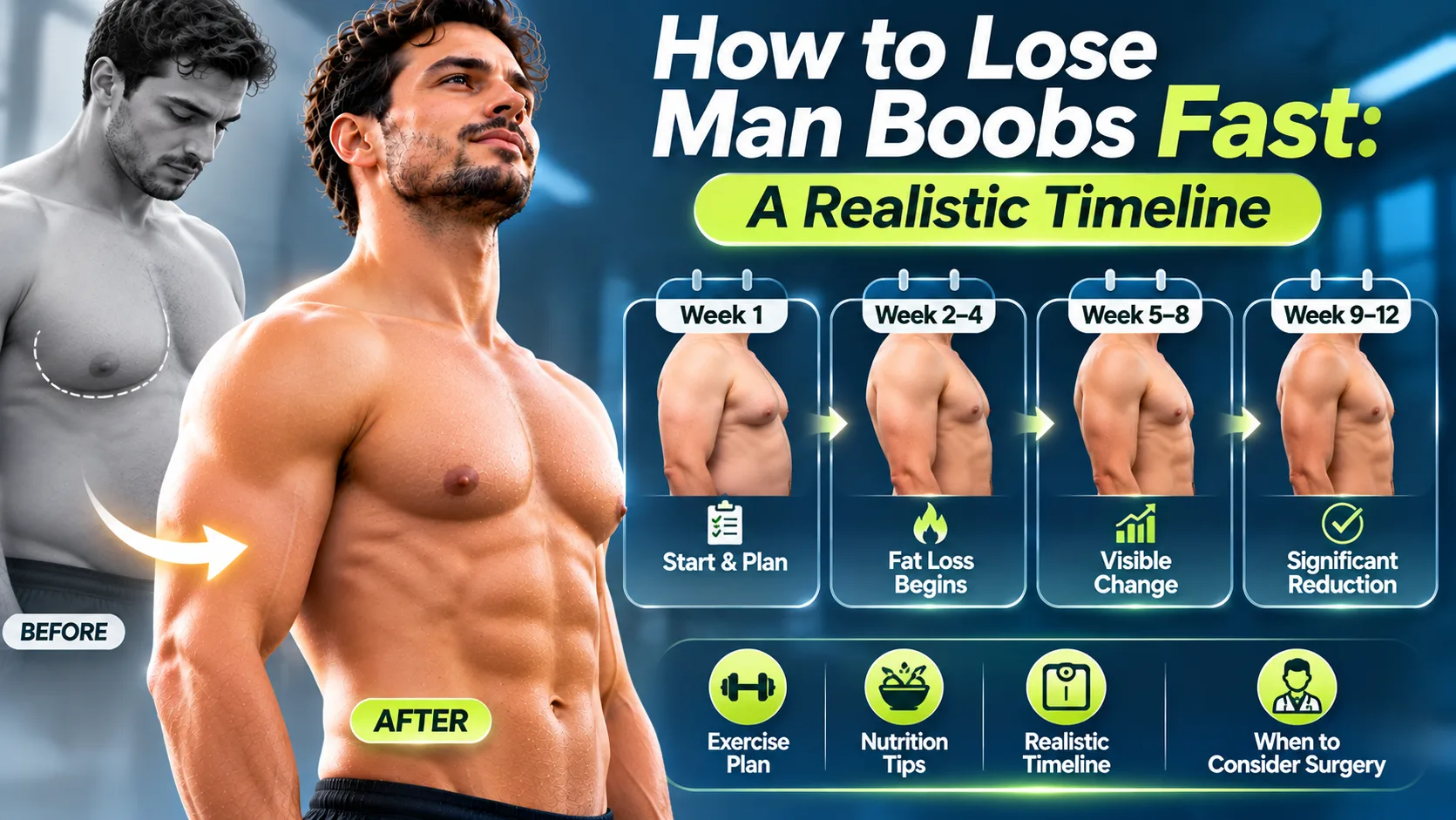
How to Get Rid of Man Breasts Fast: A Realistic Timeline
Realistic timelines for losing chest fat versus gland tissue, what diet and exercise can and can't do, and why surgery is often the fastest reliable route.

How to Get Rid of Man Breasts Without Surgery: What Works and What Doesn't
Diet and exercise can reduce chest fat, but they cannot remove glandular tissue. Here is what works, what doesn't, and when a surgeon's opinion makes sense.
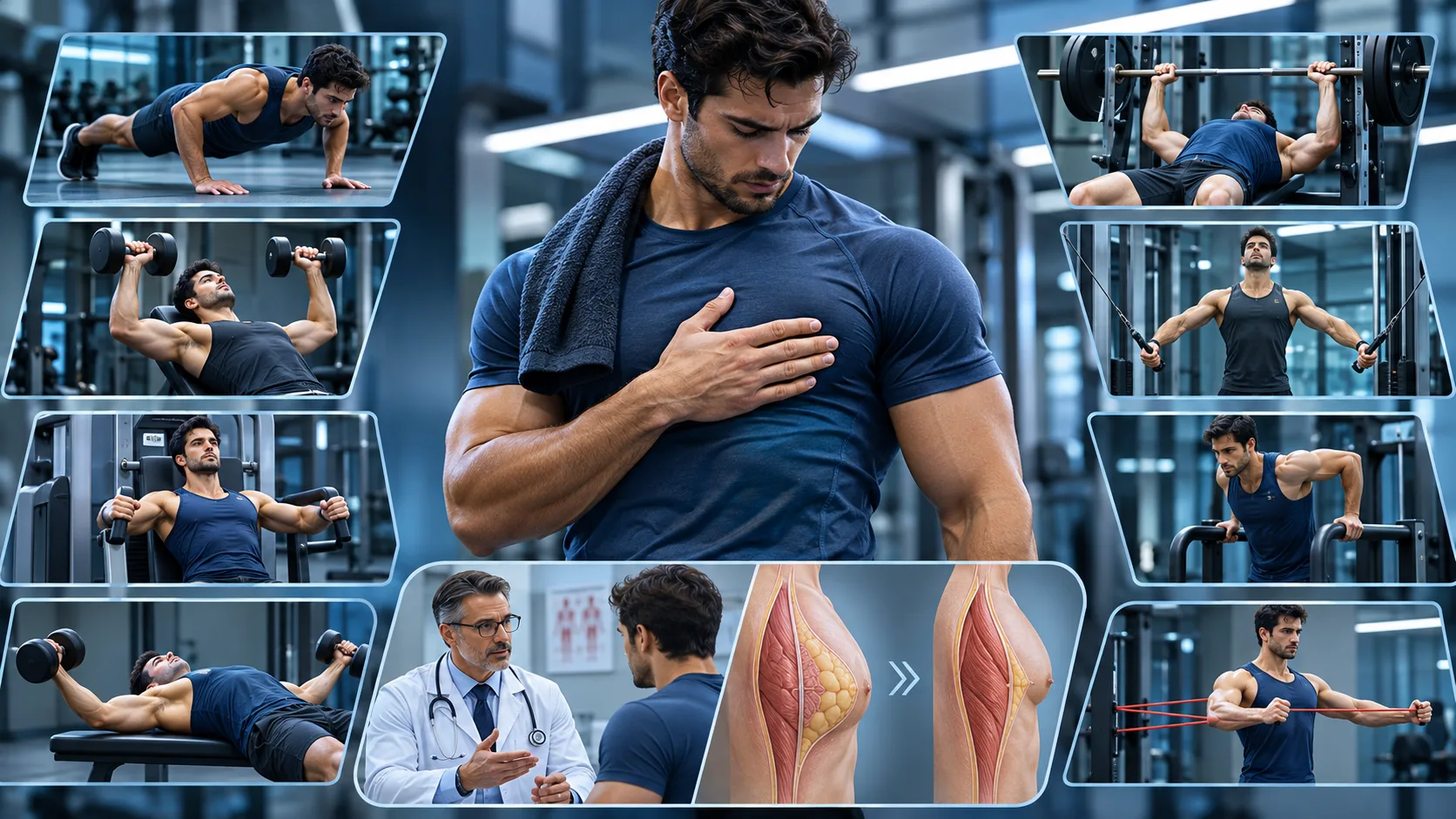
Getting Rid of Man Breast with Workouts: 8 Chest Exercises and Their Limits
Chest workouts can firm the muscle under the breast but cannot shrink breast gland. Learn the 8 best exercises, a 3-month test to tell fat from gland, and when to get assessed.