
How to Get Rid of Man Breasts Fast: A Realistic Timeline
Realistic timelines for losing chest fat versus gland tissue, what diet and exercise can and can't do, and why surgery is often the fastest reliable route.
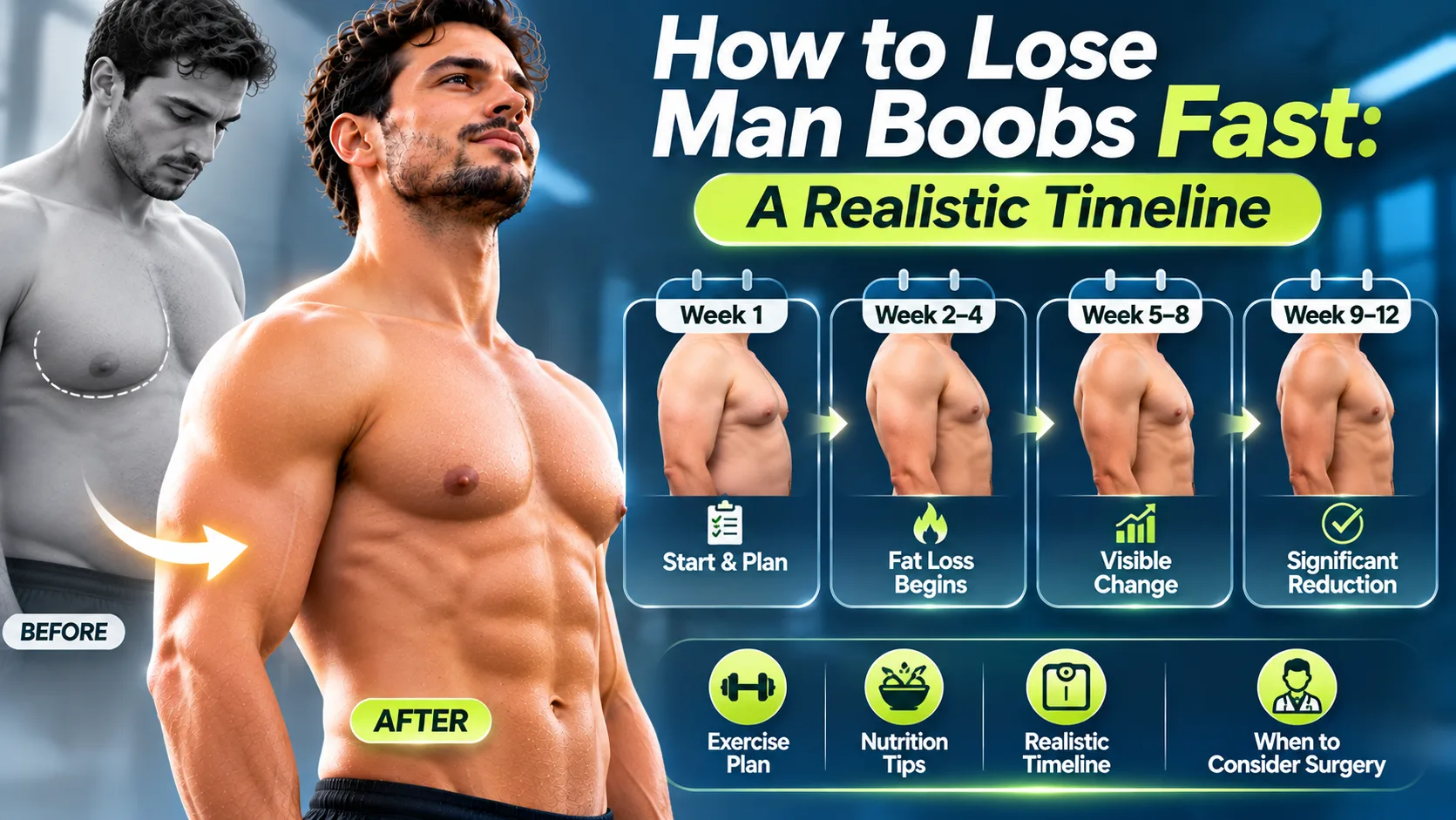
If you are searching for how to get rid of man breasts fast, the honest answer depends on what is causing them. Fat in the chest can soften over several months of steady weight loss. Glandular breast tissue does not respond to diet, exercise or creams, and no medication is proven to reliably remove it. This guide sets out a realistic timeline for each route, explains why surgery is often the quickest reliable option, and lists the warning signs that need a doctor first. For a side-by-side view of every option, read our guide on how to get rid of man breasts.
Key takeaways
- Chest fat (pseudogynecomastia) can look flatter within weeks to months of sustained fat loss. Expect months, not days.
- Glandular breast tissue does not disappear with diet, exercise, supplements or creams. Spot reduction is a myth.
- A realistic pace of weight loss is often around 0.5 to 1 kg (about 1 to 2 lb) a week. Crash methods rarely last and do not touch gland tissue.
- For glandular gynecomastia, surgery is the quickest reliable route: one operation of 1 to 2 hours under general anesthesia, with a final result at 3 to 6 months.
- A hard lump, nipple discharge or bleeding, skin dimpling, or a one-sided lump that is growing needs a doctor's check before you consider any treatment.
How to get rid of man breasts fast: what 'fast' really means
'Fast' depends on whether your chest is mostly fat or mostly gland, because the two respond to different treatments on very different timelines. Most men cannot tell which they have just by looking in the mirror, and that uncertainty is why many spend months on an approach that cannot work for their particular chest.
Under the skin, a male chest can contain fat, glandular tissue, or both. Fat is soft and changes with your overall body weight. Gland is a firmer, disc-shaped area directly behind the nipple and areola, and it usually does not shrink when you lose weight. Many men have a mixture of the two. This is one reason weight loss can produce uneven results: the fatty layer may flatten while the firmer area under the nipple stays the same size.
Fat or gland: why the difference decides your timeline
| Chest fat (pseudogynecomastia) | Glandular tissue (gynecomastia) | |
|---|---|---|
| What it is | Extra fat over a normal chest | Enlarged breast gland tissue, often firm and sometimes tender |
| Responds to weight loss? | Often, noticeably | Usually little or none |
| Typical time to see change | Weeks to several months | No reliable change through diet alone |
| Can exercise fix it? | It can firm the chest once fat falls, but it does not remove gland | No |
| Fastest reliable route | Sustained weight loss, or liposuction such as VASER | Surgical removal of the gland, often with liposuction |
| Doctor check needed? | Yes, to rule out other causes | Yes, always |
A simple self-check can offer clues but not a diagnosis. Fat usually feels soft and spread across the chest, and it tends to soften as your weight changes. Gland usually feels firmer and more localized directly under the nipple, sometimes with tenderness. A doctor or surgeon can confirm which one you have by examining you, and sometimes by imaging or blood tests.
Three speeds: what 'fast' can realistically mean
In practice, 'fast' falls into three rough tiers, and only one of them applies to gland tissue.
- Weeks: You may notice early changes if your weight is falling steadily. Part of the early change can be water weight, so it is not a reliable measure of fat loss.
- Months: For a fat-based chest, this is where most visible change happens. Consistent habits over three to six months usually show far more than a few good weeks.
- One operation, then months of settling: For glandular tissue, surgery removes the tissue directly. The operation itself takes 1 to 2 hours under general anesthesia, but the final shape takes 3 to 6 months to settle as swelling goes down.
Any promise of a flatter chest within days, from a cream, drink or device, should be treated with suspicion. No such product has been shown to remove breast tissue.
How common is man breast enlargement, and what causes it?
Enlarged male breast tissue is common. It usually comes from a shift in the balance between estrogen and androgen (male hormone) activity in breast tissue, although the exact trigger is often unclear. Estimates of how many men are affected vary between studies, so treat any single figure with caution. A review published in Mayo Clinic Proceedings covers how often it occurs and how it is assessed.
The NEJM review by Braunstein describes the main groups of causes. These include:
- Normal life stages, such as puberty, the newborn period and older age, when hormone levels shift
- Excess body weight, which can add fat to the chest and affect hormone balance
- Certain prescribed medicines
- Anabolic steroids and prohormones
- Medical conditions, such as liver, kidney or thyroid disease
- No clear cause, in some men
Understanding the cause matters for two reasons. First, a cause such as a medicine or a medical condition may be treatable at its source. Second, the cause affects whether diet, surgery or medical review is the right first step.
Does age or puberty change the picture?
Breast enlargement during puberty and in older men is a recognized life-stage change, as the review above describes. In adolescent boys, enlargement often settles over time as hormone levels stabilize, which is why doctors commonly monitor it before recommending treatment. Adults are different. If enlargement has persisted for a long time, it is less likely to resolve by itself, and a clear plan is more useful than waiting. Surgery for anyone under 18 is considered only in the narrow circumstances described later in this guide.
Medicines that can contribute
Some prescribed medicines are known to contribute to breast enlargement in men. Some recreational and performance-enhancing drugs can do the same. If you think a medicine may be involved, do not stop, reduce or change it on your own. Speak to the doctor who prescribed it. They can weigh the benefit of the medicine against the side effect and advise on alternatives. It is worth raising even if you have never connected the two.
When enlargement points to a medical problem
Breast enlargement can sometimes be a sign of an underlying condition, so it is worth a proper check rather than assuming it is simply fat. A doctor may ask about your medicines, supplements, alcohol use and general health, and may order blood tests. This check matters most if the change is recent, one-sided, painful, or linked with other symptoms. Do not decide the cause yourself from a search result, including this one.
How do I lose man breasts fast with diet and exercise?
Yes, if the enlargement is mostly chest fat, and only as far as you lose overall body fat. No, if the enlargement is mostly glandular tissue. Diet and exercise cannot selectively burn fat from your chest, so the change you see depends on your total body fat and your natural pattern of fat storage.
Why spot reduction does not work
Your body decides where it draws fat from, and it does not follow your training plan. Training one muscle group does not burn the fat sitting on top of it. Crunches, push-ups and chest presses build muscle and can improve how your chest looks once fat has fallen, but they do not remove fat or gland tissue from the area. Many men notice their chest responds only after overall body fat has dropped, because fat loss tends to follow a person's own pattern rather than the exercises they choose.
A realistic weight-loss timeline
Many health bodies suggest losing around 0.5 to 1 kg (about 1 to 2 lb) a week as a sustainable pace. At that rate, a man who needs to lose 8 kg (about 18 lb) would take roughly two to four months. Faster loss is possible, but it is harder to keep off and can cause tiredness, muscle loss and, in some people, gallstones. Any very low-calorie plan should be medically supervised.
Losing around 8 percent of body weight is a useful milestone to track, although the chest responds differently in each man. A man who weighs 100 kg and loses 8 kg has moved from 100 kg to 92 kg, and that is a practical checkpoint. Your waist measurement and dated photos will often tell you more than the scale.
| Timeframe | What you may notice if the chest is mainly fat | What is unlikely if the chest is mainly gland |
|---|---|---|
| Weeks 1 to 4 | Some reduction in fullness if weight is falling steadily; early changes can be partly water weight | Little or no change |
| Months 1 to 3 | The chest often looks flatter as overall body fat drops; clothing may fit differently | Little change; the area may feel firmer or stay the same |
| Months 3 to 6 | The most visible change, if weight loss is sustained | No reliable shrinkage from diet alone |
| Month 6 onward | Maintenance matters; regaining weight can bring the fat back | The gland remains unless it is removed |
Does exercise help?
Exercise helps your chest look better, but it does not shrink gland tissue. Strength training builds the pectoral muscles underneath the tissue, and a firmer muscle base can make a chest look more defined once fat has fallen. Useful movements include push-ups, dumbbell presses, cable flyes and rows, which train the chest and upper back together.
A practical structure is two or three full-body strength sessions a week, plus regular cardio. Public health guidelines commonly suggest around 150 minutes of moderate activity a week for adults, and cardio is the part that helps with overall fat loss. Chest training is not a way to reduce the gland itself, so set expectations accordingly.
Ways to lose man breasts fast: what works and what does not
For a fat-based chest, consistent calorie control and regular training are the only non-surgical methods with reasonable support. Creams, supplements and devices cannot remove breast gland tissue, and no non-surgical method is proven to reliably do so.
| Option | What it can do | Speed | Limits |
|---|---|---|---|
| Calorie reduction and sustained weight loss | Reduces chest fat if fat is the main cause | Weeks to months | Cannot shrink gland; needs a long-term habit |
| Strength and cardio training | Builds chest muscle and supports overall fat loss | Strength gains in weeks; visible change over months | Does not reduce gland |
| Medical review of medicines, blood tests and underlying conditions | May reduce enlargement if a medicine or medical problem is the cause | Depends on the cause | Only a doctor can judge what applies to you |
| Creams, gels and 'fat-burning' supplements | No reliable evidence that they remove breast tissue | Not applicable | Can waste money; product quality and ingredients can vary |
| Prescription medicines | Used by doctors in selected cases | Varies | Not proven to remove established gland; side effects; never self-prescribe |
| Surgery | Removes gland, fat or both | One operation of 1 to 2 hours; final result at 3 to 6 months | Surgical risks; cost; recovery time |
For a full breakdown of non-surgical methods, including the ones that do not work, read our guide on how to get rid of man breasts without surgery.
How to get rid of man breast fast without surgery: a realistic plan
You can shrink the fat-based part of your chest by losing overall body fat, but this usually takes months. The gland part does not respond to the same approach. The most practical steps are:
- Track progress with photos taken every two to four weeks in the same light and posture. The scale alone can be misleading, because water and food weight move from day to day.
- Aim for a moderate daily calorie deficit with plenty of protein and vegetables, and choose changes you can keep up for months rather than weeks.
- Do strength training two to four times a week, plus regular cardio, to build muscle and support fat loss.
- Limit alcohol. It adds calories and can affect hormone balance and the liver.
- Ask your doctor to review any medicines, supplements or steroid use. Do not stop prescribed treatment on your own.
How to reduce man breasts fast: what to ask your doctor
A short, focused appointment can rule out fixable causes and save you months of guesswork. Useful questions include: Could any of my current medicines affect my chest? Do my results suggest a hormone, liver, kidney or thyroid issue that needs investigation? Is my chest mostly fat or mostly gland, and what does that mean for my options? Are there any treatments that could help, and what are their limits? Write the questions down before you go, and bring a list of everything you take, including supplements and over-the-counter products.
How long does it take to lose man breast tissue without surgery?
Chest fat usually takes months of steady work to change visibly. Gland tissue does not have a reliable non-surgical timeline, and no diet or exercise plan is known to shrink it. For most adult men, a realistic expectation is three to six months of consistent effort to see the fat-based part of the chest change, and no meaningful change to the gland from lifestyle alone.
If the tissue has been present for a long time, the wait is unlikely to change it. A surgeon or doctor can help you decide what to do next, and the sooner you have an accurate diagnosis, the sooner you can make a sensible plan.
How to lose man breast quickly: a realistic expectation
Quick is relative. For fat, a sustainable plan that you can keep for three to six months is the fastest reliable route. For gland, the fastest reliable route is one operation, followed by months of settling. Crash diets promise faster results, but rapid loss is hard to maintain and often costs muscle rather than targeting the chest. Choosing the route that matches your cause will do more for you than chasing a faster-sounding claim.
Common myths about losing man breasts fast
Most quick fixes that circulate online do not change breast tissue. Some have a grain of truth, which is why they are persuasive, but none of them removes gland tissue.
Sweating it off in a sauna or sweat suit
Sweat is mainly water. Losing water weight can look like progress on the scale, but it does not remove fat or gland from the chest. Once you drink fluids again, the weight returns.
Crunches or chest presses will flatten it
Training builds the muscle beneath the tissue, which can improve the look of the chest once fat has fallen. It does not burn fat from the chest specifically, and it does not reduce gland. Your training can support the result, but it cannot be the whole plan.
Fat-burning creams, patches and supplements
No cream, patch or supplement has been shown to reduce breast gland tissue. Some products may carry unnecessary risk, and their labels may not tell you everything about what is inside. If you are considering one, speak to a doctor first, especially if you take other medicines.
Detox teas and extreme fasting
Rapid weight loss can make you feel lighter and look slimmer for a few days, but it often reflects water and glycogen rather than fat. Extreme approaches can cause tiredness, dizziness and muscle loss, and they do not address the tissue that is causing the concern.
Tight tops or compression shirts
A snug top can make a chest look flatter under clothing, and that may help you feel more comfortable in the short term. It does not reduce tissue. It is a styling choice, not a treatment.
When should you see a doctor before trying anything?
See a doctor before trying any treatment if you notice a lump, pain, discharge, bleeding or changes in the skin. A new hard lump needs to be checked, because it cannot be judged reliably from appearance alone. Most breast changes in men are not serious, but you should not assume that without a proper examination.
See a doctor promptly if you have:
- A hard or fixed lump in the breast
- A lump on one side only that is growing
- Nipple discharge or bleeding
- Skin dimpling or puckering over the chest
- Chest pain with breathlessness: call your local emergency number now
What will a doctor check at your appointment?
A doctor will usually take a history, examine both sides of your chest and ask about medicines and substances. Knowing what to expect can make the appointment more useful and less awkward.
The history may cover when you first noticed the change, whether it is on one side or both, whether it is painful, your weight over time, and any recent changes in medicines or supplements. Be honest about alcohol, cannabis, steroids and prohormones, because these can affect both the chest and any treatment decisions. Doctors see this regularly and the questions are routine.
The examination compares the two sides and checks whether the tissue feels like fat, firm gland or both. It also looks at the skin and nipple. Depending on your findings, a doctor may order blood tests, for example to check hormone levels, liver, kidney or thyroid function. In some cases they may recommend imaging, such as an ultrasound. Which tests are needed depends on your history and examination, and a doctor will explain the reason for each one.
What is the quickest way to lose man breasts? The surgical route
For glandular gynecomastia, surgery is the quickest reliable route. Liposuction removes fat, and gland excision removes the tissue itself. Both can often be done in a single operation of 1 to 2 hours under general anesthesia. The final shape settles over 3 to 6 months, and the most demanding part of recovery is usually the first few weeks.
Surgery is not the right answer for everyone. It suits men whose enlargement persists despite a fair attempt at weight loss, or whose gland is firm and unlikely to change, and it works best when the expectations are realistic and the assessment is thorough.
Which grade fits you? The Simon classification
Surgeons often describe enlarged male breasts using the Simon classification, a widely used grading system. It runs from small enlargement with little or no excess skin (Grade I) to marked enlargement with excess skin and drooping (Grade IV). Your grade shapes which procedure is suitable, whether the skin needs tightening, and how long your stay will be.
| Grade or picture | Typical features (surgeon confirms) | Usual approach | Package, 2026 (all-inclusive, flights excluded) |
|---|---|---|---|
| Grade I, or pseudogynecomastia | Small enlargement, mostly fat or small gland under the nipple, little or no excess skin | VASER liposuction only | $2,500 |
| Grade I to II | Gland tissue with skin that is expected to retract well | VASER liposuction plus gland excision (most popular) | $3,000 |
| Where a more sculpted contour is wanted | Gland and/or fat; the surgeon decides suitability | Hi-Def VASER plus excision | $3,500 |
| Grade III to IV | Excess skin and drooping; may need skin tightening and nipple repositioning | Gland excision with skin tightening and nipple repositioning; one hospital night | $4,200 |
| Fat across the torso as well | Gynecomastia plus fat on the abdomen and flanks | Gynecomastia surgery plus full-torso VASER | $5,500 |
The grade is a starting point, not a verdict. A surgeon will look at the balance of fat, gland and skin in person, and may recommend a different approach from the one that first seems obvious from photos.
Liposuction, excision, or both: how the options differ
VASER liposuction is an ultrasound-assisted technique that breaks down fat before it is gently removed through small incisions. It works well on fat, but liposuction alone is often not enough for firm gland tissue directly under the nipple. That is why the gland excision option exists. Excision removes the gland through incisions chosen by the surgeon for your anatomy.
Many men need both, because fat and gland usually coexist. Hi-Def VASER adds finer sculpting of the chest contour, and it is chosen when a more defined shape is wanted. Skin tightening and nipple repositioning are considered when there is excess skin, which is why the Grade III to IV package includes one hospital night. Your surgeon will explain which combination matches your chest and why.
What happens during the operation
The operation is performed under general anesthesia, with an anesthesiologist present throughout. This is a separate role from the surgeon, and it is one reason the choice of hospital matters. Where gland tissue is removed, it is excised through incisions that the surgeon chooses based on your anatomy and technique.
Removed tissue is sent for histology, which means it is examined in a laboratory. This is standard practice for confirming what has been removed, and it is one of the reasons a surgeon can be sure of the diagnosis after surgery. After the operation you will wear a compression vest, which is an important part of helping the chest settle into shape.
What to expect during recovery
Most men return to desk work within 5 to 7 days, begin lower-body gym work at about two weeks, and resume chest training at 4 to 6 weeks. The compression vest is worn for 4 to 6 weeks, and the final shape takes 3 to 6 months. Your surgeon sets your personal schedule, and these timings are typical for the clinic's packages.
| Timing | What to expect | Milestones |
|---|---|---|
| Days 1 to 2 | Swelling, bruising and tenderness; compression vest worn | Nurse visits on days 2 and 3 |
| Days 3 to 4 | Usually fly home (days 5 to 6 for Grade III to IV) | Travel plan agreed with your surgeon |
| Days 5 to 7 | Desk work can usually resume | Desk work 5 to 7 days |
| Week 1 | Video follow-up with the surgical team | First check-in |
| Week 2 | Lower-body gym training can usually begin | Lower-body gym from 2 weeks |
| Week 4 | Video follow-up; swelling continues to settle | Chest training can usually start at 4 to 6 weeks |
| Weeks 4 to 6 | Compression vest continues | Vest 4 to 6 weeks |
| Week 8 | Video follow-up | Progress review |
| 3 to 6 months | Final shape settles | Final result at 3 to 6 months |
The first days at home
The first few days are the most uncomfortable. Expect swelling, bruising and tenderness, and wear the compression vest as instructed. Nurse visits on days 2 and 3 allow the team to check the chest and answer questions. Your surgeon will give specific instructions on activity, showering and the vest, and those should take priority over general advice you read online.
Travel home and clot precautions
After surgery, the risk of blood clots is a concern during air travel. Ask your surgeon about the timing of your flight and any precautions they recommend. Staying hydrated and moving your legs during the journey are commonly advised, but your surgeon's instructions come first. Plan the trip so that you are not rushed, and avoid booking an onward journey that leaves no room for changes.
Returning to training and everyday life
Desk work usually resumes within 5 to 7 days, although some men need longer depending on how their job involves physical effort. Lower-body gym work can usually begin at about two weeks. Chest training waits until 4 to 6 weeks, when the surgeon is satisfied that the tissues have healed. Smoking affects healing, which is why the clinic asks candidates not to smoke for four weeks before and after surgery.
Risks and what can go wrong
All surgery carries risk. The specific risks depend on your body, your grade and the technique used, and your surgeon should explain them in your consultation before you decide. Possible complications include:
- Bleeding under the skin (hematoma), which may need drainage
- Infection
- Fluid collection under the skin (seroma)
- Uneven shape, asymmetry or contour irregularities
- Visible scarring, which varies with skin type and healing
- Temporary or lasting changes in nipple or chest sensation
- Skin that does not retract as hoped, which may need further surgery
- Blood clots, which are relevant during air travel after surgery
- Risks linked to general anesthesia
Revision means a second operation to correct a result. It is possible after any surgery, and it is the main thing to plan for if an outcome is not as expected. Gynecomastia Turkey reports, from its own internal audit (not peer-reviewed), a revision rate under 1%. Treat that as the clinic's own figure rather than an independent benchmark. Ask any surgeon, in Turkey or elsewhere, to explain their complication and revision rates and how they are measured.
Surgery is a decision for a man who has had an honest assessment, not a quick fix for a bad week. Take time to read the risks, ask questions and compare options before you commit.
Surgery in Istanbul: cost, trip length and what is included
If you are comparing options, gynecomastia surgery in Turkey is one route that puts the surgery, hotel and aftercare into a single package. Packages are all-inclusive, and flights are excluded. Prices range from $2,500 for VASER liposuction only to $5,500 for gynecomastia surgery plus full-torso VASER, as set out in the grade table above.
Surgery takes place in JCI-accredited private hospitals in Istanbul and Ankara. JCI is an international hospital accreditation standard, so check the current status of any facility you consider, wherever it is located. Gynecomastia Turkey is based in Etiler, Istanbul.
| Option | Typical price quoted | Notes |
|---|---|---|
| Gynecomastia Turkey packages | $2,500 to $5,500, all-inclusive, flights excluded | Price depends on the grade and procedure |
| Typical home quote, USA | About $8,000 | Varies by surgeon, grade and location |
| Typical home quote, UK | About £5,500 to £6,500 | Varies by surgeon, grade and location |
These home figures are typical prices quoted on the site, not guarantees. Your own costs will depend on your surgeon, your grade and where you live, so compare like with like, including what each quote covers.
What is included in every package
- Surgery, anesthesiologist and hospital stay
- 3 to 5 nights in a 5-star hotel
- VIP transfers
- A translator
- A compression vest
- Medications
- Pre-operative tests and histology
- Nurse visits on days 2 and 3
- Video follow-ups at weeks 1, 2, 4 and 8
- Lifetime WhatsApp aftercare
Flights are not included. Ask the clinic to confirm any other costs before you book, so there are no surprises.
How the trip is organized
The trip runs 4 to 6 days in total. The table below shows the main stages. Your exact schedule is confirmed by the clinic.
| Trip stage | What happens | Notes |
|---|---|---|
| Arrival and preparation | Transfer to your hotel, pre-operative tests and consultation | Hotel included for 3 to 5 nights |
| Surgery | Procedure of 1 to 2 hours under general anesthesia | Date fixed in your schedule |
| First recovery days | Nurse visits on days 2 and 3 | Compression vest worn |
| Flying home | Usually day 3 or 4 | Day 5 or 6 for Grade III to IV |
The hotel stay and transfers are designed to keep the process simple while you recover. Most patients are glad to have a clear plan and a single point of contact through the translator and the team.
Who is a good candidate for gynecomastia surgery?
Surgery suits adult men who have persistent chest fat or gland tissue, who are in stable health, and who have realistic expectations. A surgeon confirms suitability after reviewing your photos and medical history. A surgeon may delay or decline treatment if there is an unexplained lump, unstable health, recent steroid use or a condition that raises anesthesia risk.
Clinic criteria include:
- Age 18 or over. Men aged 16 or 17 may be considered only with parental consent and a gland that has been stable for at least two years.
- A stable body weight for at least 6 months.
- Off anabolic steroids and prohormones for at least 3 months. Surgeons ask about this because these substances can affect the chest and healing.
- Not smoking for 4 weeks before and after surgery.
- Realistic expectations about the final shape and the timeline.
If any of these do not apply to you yet, a doctor or surgeon can explain what to work on first. Nothing here is an instruction to stop prescribed medicine, and any change to a medicine should be discussed with the prescriber.
How do you get a free photo assessment?
The fastest way to find out which option fits you is a free photo assessment. Send two photos, one from the front and one from the side. Gynecomastia Turkey reviews the photos with a surgeon and sends a fixed quote within 24 hours. The assessment is free and carries no obligation.
Good photos make a real difference to the quality of the assessment. Follow these simple steps:
- Use natural daylight or bright, even indoor light, and avoid harsh shadows.
- Stand upright, relaxed, with your arms by your sides.
- Photograph from chest height, with the camera level, not from above or below.
- Include the chest, abdomen and waistline, so the surgeon can see how fat is spread across the body.
- Wear fitted, plain clothing or go bare-chested, whichever you are comfortable with.
- You can crop out your face if you prefer.
Because a quote is based on photos, the surgeon may ask follow-up questions, and the final plan is confirmed before surgery. You can contact the team on WhatsApp at +90 505 026 5581, or by email at info@gynecomastiasurgeryturkey.com.
How do you choose a surgeon and clinic for man breast surgery?
Choose on training, accreditation, transparency and aftercare, rather than on price alone. A low price that does not include the things that matter for safety can cost more in the end. The questions below apply to any clinic, in Istanbul or at home.
- Who will perform the surgery, and what training and experience do they have in plastic or aesthetic surgery? Verify their registration with the medical authority in the country where they practice.
- Which hospital will the surgery take place in, and does it hold JCI or another recognized accreditation?
- Who will give the anesthesia, and how is the anesthesia team managed during the operation?
- How are complication and revision rates measured, and are the figures independently audited or only internal?
- What follow-up is included, and who should you contact once you are home?
- What is covered if you need further treatment, and how is that decided?
- Do you need liposuction, excision or both, and is skin tightening likely to be needed for your grade?
Be cautious about any single rating or statistic. Clinic figures, including the ones on this site, are only as meaningful as the way they were gathered. Ask how they were collected and whether anyone outside the clinic has checked them.
Which route should you choose? A summary
The right route depends on whether your chest is mainly fat or gland, how quickly you need a result, and what you are willing to commit to. Fat responds to sustained weight loss over months. Gland does not respond to lifestyle changes and usually needs surgery. Medicines and medical conditions need a doctor's review first.
| Route | Best suited to | Speed | Main limit |
|---|---|---|---|
| Weight loss and strength training | Chest fat, with overall weight loss needed | Months | Cannot remove gland tissue |
| Medical review | Enlargement linked to a medicine or medical condition | Depends on the cause | Only a doctor can decide |
| VASER liposuction ($2,500) | Grade I, fat-based chest | One operation of 1 to 2 hours; final result at 3 to 6 months | Does not remove gland tissue |
| VASER plus gland excision ($3,000) | Grade I to II, gland present | One operation of 1 to 2 hours; final result at 3 to 6 months | Surgical risks; results vary between individuals |
| Skin tightening and nipple repositioning ($4,200) | Grade III to IV | Same operation type plus one hospital night; final result at 3 to 6 months | More extensive surgery; scarring discussed in consultation |
| Creams, gels and supplements | Nothing proven for breast tissue | Not applicable | No reliable effect on gland tissue |
Whatever you choose, a proper assessment is the most useful first step. Get a clear answer on what is causing the change, then decide on the route that matches it. If you want a surgeon's view on your photos, send them for the free assessment and compare the quote with what your doctor advises.
Frequently asked questions
Straight answers from our surgical team.
How do I lose man breasts fast?
How long does it take to lose man breast fat?
How can I get rid of man breast fast without surgery?
Is surgery the quickest way to lose man breasts?
How long is recovery after gynecomastia surgery?
Is gynecomastia surgery in Turkey safe?
How do I get a quote for man breast surgery from abroad?
Get your free surgical assessment
Send two chest photos (front and side). A board-certified surgeon reviews them and you receive a personal plan and an exact all-inclusive price within 24 hours.
No obligation. Your photos are deleted on request. or call +90 505 026 5581
- 1.Send photos
- 2.Surgeon review
- 3.Fixed quote in 24h
This guide is for educational purposes and does not replace a consultation with a qualified surgeon.
Related guides
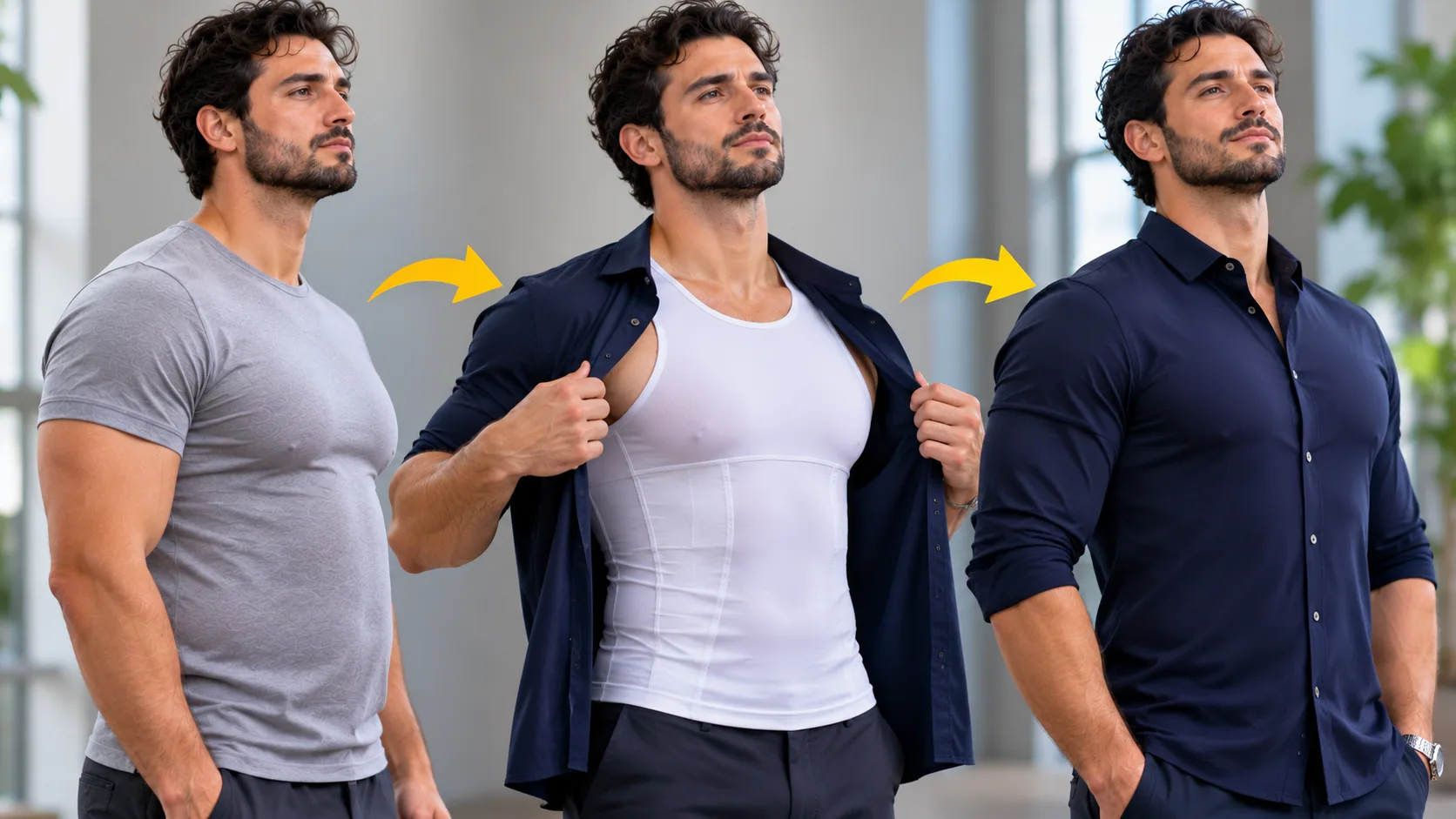
How to Hide Man Breasts: Clothing, Compression Shirts and Posture Tips
Clothing, compression tops and posture can hide man breasts in everyday life, but they don't change the tissue. Here's what works, what doesn't, and when surgery may be worth weighing up.

How to Get Rid of Man Breasts Without Surgery: What Works and What Doesn't
Diet and exercise can reduce chest fat, but they cannot remove glandular tissue. Here is what works, what doesn't, and when a surgeon's opinion makes sense.
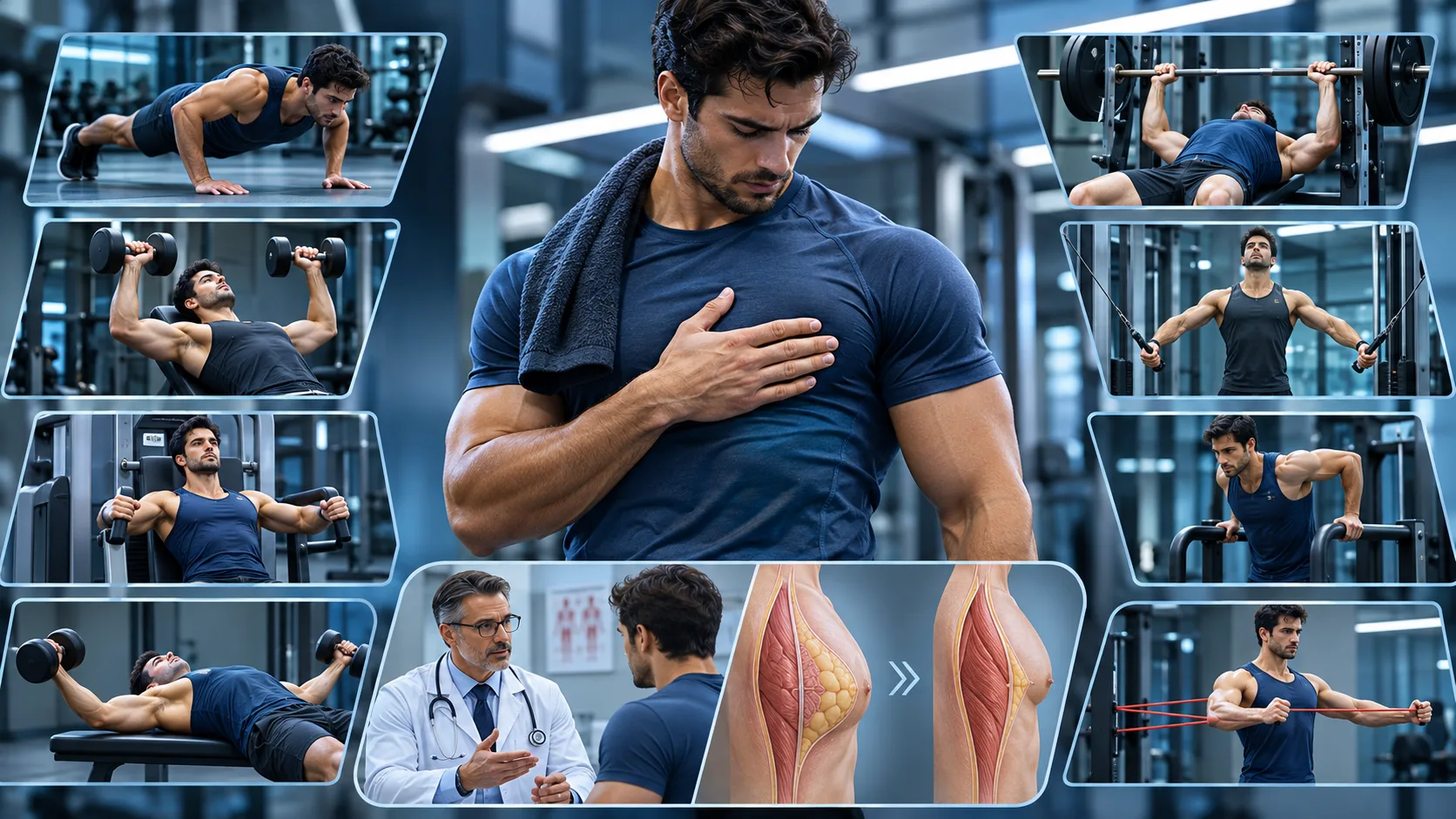
Getting Rid of Man Breast with Workouts: 8 Chest Exercises and Their Limits
Chest workouts can firm the muscle under the breast but cannot shrink breast gland. Learn the 8 best exercises, a 3-month test to tell fat from gland, and when to get assessed.